

Introduction
Waist pain can be a real pain—literally! Whether it sneaks up after sitting too long, lifting something heavy, or from years of posture neglect, that nagging ache can slow you down. But here’s the good news: targeted exercises can bring fast, powerful relief. By moving smartly and focusing on your core and back muscles, you can reduce pain, improve flexibility, and even prevent future flare-ups. Ready to take charge of your waist health? Let’s dive in.
Common Causes of Waist Pain
Poor Posture
Slouching at your desk or hunching over your phone doesn’t just look bad—it strains your lower back and waist muscles, leading to chronic discomfort.
Muscle Strain
Overdoing physical activity or sudden movements can strain your waist muscles. Even small, repetitive tasks like bending or twisting incorrectly can accumulate pain over time.
Sedentary Lifestyle
Sitting for hours weakens your core and back muscles. Weak support around the spine often leads to stiffness, tension, and pain.
Underlying Medical Conditions
Sometimes, waist pain isn’t just about posture or movement—it can hint at herniated discs, sciatica, or kidney issues. Always pay attention to the type and intensity of your pain.
Benefits of Waist Pain Exercises
Pain Reduction
Gentle stretches and targeted movements relax tight muscles, relieve pressure, and soothe discomfort almost immediately.
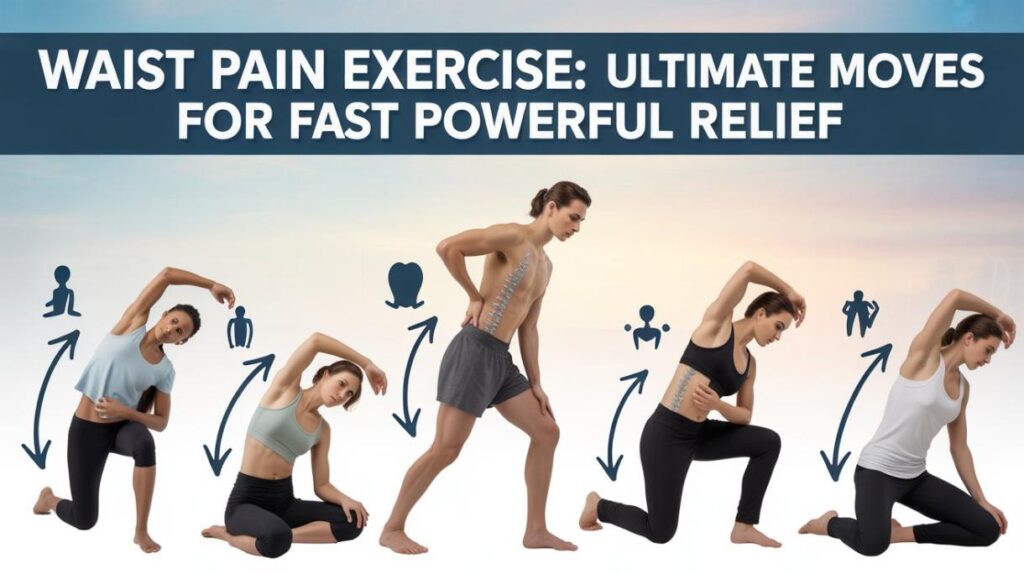
Improved Mobility
Regular waist exercises enhance flexibility, making everyday movements—like bending, twisting, and reaching—much easier and pain-free.
Strengthened Core Muscles
A strong core supports your spine and prevents future injuries. Waist exercises aren’t just about relief—they’re about building resilience.
Warm-Up Before Waist Exercises
Gentle Stretching
Start with light stretches for your hips, lower back, and hamstrings. This prevents injury and loosens stiff muscles.
Dynamic Movements
Add gentle torso twists, side bends, or marching in place to get your blood flowing and prepare your waist muscles for the main exercises.
Best Waist Pain Exercises
Cat-Cow Stretch
Start on all fours, arch your back up like a cat, then dip it down like a cow. This fluid movement mobilizes your spine and releases tension instantly.
Child’s Pose Stretch
Kneel down, sit back on your heels, and reach your arms forward. This stretch elongates your spine and relaxes tight lower back muscles.
Pelvic Tilts
Lie on your back, knees bent, and gently tilt your pelvis upward. Repeat 10–15 times to strengthen your core and reduce stiffness.
Knee-to-Chest Stretch
Pull one knee toward your chest at a time while lying down. This stretches your lower back and eases pressure on your waist.
Seated Spinal Twist
Sit with your legs extended, bend one knee, and twist toward the bent leg. This improves spinal flexibility and loosens tight waist muscles.
Bridge Pose
Lie on your back with knees bent, lift your hips upward, and hold for a few seconds. This strengthens the glutes and lower back, supporting your waist.

Cobra Stretch
Lie face down, palms on the floor, and gently lift your chest. This stretches your lower back and relieves tension in the spine.
Advanced Moves for Stronger Relief
Bird-Dog Exercise
From all fours, extend one arm and the opposite leg simultaneously. Hold, then switch. This stabilizes your core and improves balance.
Plank Variations
Forearm or side planks strengthen your entire core, creating a solid support system for your waist and spine.
Side-Lying Leg Raises
Lie on your side and lift your top leg slowly. This strengthens oblique and hip muscles, reducing pressure on your lower back.
Tips to Maximize Results
Consistency is Key
Doing exercises once won’t cut it. Aim for at least 3–4 sessions per week to see lasting results.
Maintain Proper Form
Bad form can worsen waist pain. Move slowly, follow instructions, and focus on muscle engagement, not just movement.
Combine with Healthy Lifestyle
Regular exercise, proper posture, hydration, and balanced nutrition all contribute to waist health and long-term pain relief.
When to Seek Professional Help
Warning Signs
If your waist pain is severe, persistent, or accompanied by numbness, tingling, or fever, don’t wait—see a professional.

Importance of Consultation
A physical therapist or medical professional can tailor exercises to your specific condition, ensuring safe and effective relief.
Conclusion
Waist pain doesn’t have to control your life. With the right exercises, stretches, and consistency, you can find fast, powerful relief and strengthen your core for the long haul. Start slow, stay consistent, and listen to your body—it will thank you with a pain-free, flexible waist.
FAQs
Q1: How long will it take to see results from waist pain exercises?
Results can vary, but many people notice improvement within 1–2 weeks of consistent daily practice.
Q2: Can these exercises prevent future waist pain?
Yes! Strengthening your core and improving flexibility helps prevent recurring pain and supports your spine.
Q3: Do I need special equipment for these exercises?
No equipment is necessary for most waist pain exercises—just a mat and comfortable space.
Q4: Can I do these exercises if I have chronic back pain?
Most gentle stretches are safe, but consult a doctor or physical therapist before starting if you have chronic or severe pain.
Q5: How often should I perform these waist exercises?
Aim for 3–4 times per week, or daily if your body feels comfortable, to maximize relief and strengthen your waist muscles.










Leave a Comment