
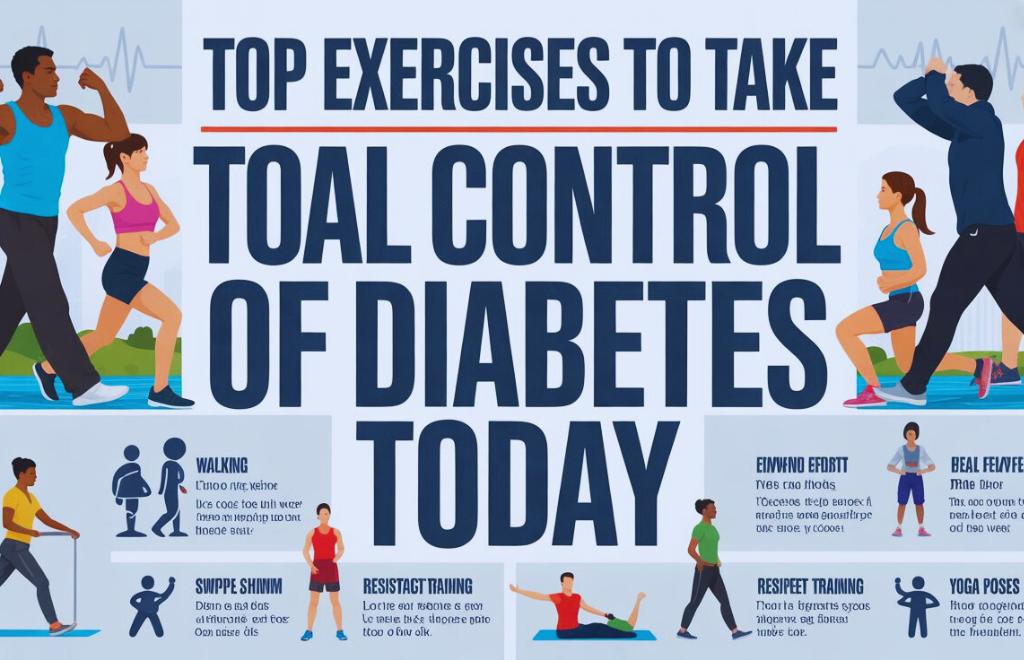
Diabetes is one of the fastest-growing health challenges in the world, but the good news is this: the right exercises can help you take full control of your blood sugar—starting today. Physical activity works like a natural medicine that increases insulin sensitivity, supports weight management, strengthens the heart, and improves overall metabolic health.
If you or someone you care about is living with diabetes, the right exercise routine can significantly transform daily energy, long-term health, and emotional well-being. This article explores the most effective exercises, how they improve blood sugar levels, and how to build a safe, enjoyable fitness plan—even if you’re a complete beginner.
Why Exercise Is So Important for Diabetes Control
For people with Type 1 or Type 2 diabetes, exercise provides benefits that go far beyond weight loss. Regular movement helps:
1. Improve Insulin Sensitivity
Your muscles use glucose for fuel. The more you move, the easier it becomes for the body to use insulin properly, lowering blood sugar levels naturally.
2. Reduce Blood Glucose Spikes
After meals, a short walk or light exercise can dramatically reduce post-meal glucose spikes.
3. Support Healthy Weight Management
Excess weight—especially around the abdomen—can make blood sugar harder to control. Exercise helps burn calories and build muscle mass.
4. Strengthen the Heart
People with diabetes have a higher risk of cardiovascular disease, and exercise is one of the strongest protective tools.
5. Improve Mood and Reduce Stress
Stress hormones like cortisol can raise blood sugar. Exercise releases endorphins, helping balance both mood and glucose.
Top Exercises to Take Total Control of Diabetes Today
Let’s explore the most powerful, diabetes-friendly exercises that can help you feel better, move better, and live healthier.
1. Brisk Walking — The Easiest and Most Effective Start
Walking is one of the simplest and safest exercises for diabetes control. You can do it anywhere, anytime, and without special equipment.
Why It Works
- Raises heart rate gently
- Improves insulin sensitivity
- Helps burn calories
- Reduces post-meal blood sugar levels
How Much to Do
Aim for at least 30 minutes of brisk walking five days a week. If walking feels too long, break it down into three 10-minute sessions.
Pro Tip
Take a 10–15 minute walk after meals to prevent sharp glucose spikes.
2. Strength Training: Build Muscle, Burn More Sugar

Strength or resistance training is one of the best ways to increase muscle mass, and muscle acts as a powerful glucose-burning engine.
Why It Works
- More muscle = more glucose used, even while resting.
- Enhances insulin sensitivity for up to 48 hours.
- Helps maintain healthy body weight.
Recommended Strength Exercises
- Bodyweight squats
- Wall or knee push-ups
- Resistance band pulls
- Dumbbell curls and rows
- Glute bridges
How Much to Do
Start with 2–3 sessions per week focusing on all major muscle groups.
Pro Tip
If you’re new, begin with light weights or resistance bands and gradually increase intensity.
3. Cycling — Joint-Friendly and Highly Effective
Cycling is perfect for people who need a low-impact exercise that still gives a solid cardiovascular workout.
Why It Works
- Gentle on the knees and hips
- Burns calories quickly
- Improves heart health
- Safe for overweight beginners
How Much to Do
Aim for 20–45 minutes, 3–5 times per week. Stationary bikes are equally effective.
Pro Tip
Mix intervals: 2 minutes slow, 1 minute fast. This boosts endurance and blood sugar control.
4. Swimming — The Best Full-Body Workout for Diabetics
Swimming is excellent if you want a workout that feels refreshing and doesn’t stress the joints.
Why It Works
- Uses every major muscle group
- Burns a high number of calories
- Reduces pain for those with neuropathy or joint issues
- Improves lung and heart capacity
How Much to Do
Try 20–30 minutes of steady swimming or water aerobics 2–3 times per week.
Pro Tip
Water aerobics classes are great for seniors or beginners.
5. Yoga — Balance Blood Sugar While Reducing Stress
Yoga combines movement, stretching, breathing, and mindfulness—all of which are scientifically proven to support diabetes control.
Why It Works
- Reduces stress hormones that spike blood sugar
- Improves flexibility and blood circulation
- Supports weight management
- Helps with mental well-being
Best Poses for Diabetes
- Cobra pose
- Bridge pose
- Mountain pose
- Legs-up-the-wall pose
Pro Tip
Just 20 minutes of yoga daily can improve fasting glucose and reduce stress levels.
6. High-Intensity Interval Training (HIIT)

HIIT involves short bursts of intense activity followed by rest. This method burns fat faster and improves insulin sensitivity dramatically.
Why It Works
- Burns more calories in less time
- Boosts metabolism for hours after exercise
- Improves blood sugar quickly
Sample HIIT Routine
- 30 seconds fast-paced walking or jogging
- 30 seconds slow walking
- Repeat for 15 minutes
Pro Tip
Start slowly. HIIT is powerful but should be done at your own pace.
7. Stretching and Flexibility Exercises
These aren’t often considered “blood sugar exercises,” but they play a vital role in overall movement and circulation.
Why It Works
- Reduces stiffness caused by high blood sugar
- Prevents injuries during workouts
- Enhances blood flow to muscles
How Much to Do
Stretch for 10–15 minutes after each workout.
How to Create a Weekly Diabetes-Friendly Exercise Plan
Here’s a simple, balanced routine to get started with:
Weekly Plan Example
Monday:
Brisk walking – 30 minutes
Light stretching – 10 minutes
Tuesday:
Strength training – 20 minutes
Yoga – 10 minutes
Wednesday:
Cycling – 25 minutes
Core exercises – 10 minutes
Thursday:
Rest or gentle yoga – 20 minutes
Friday:
Brisk walking + intervals – 30 minutes
Light stretching – 10 minutes
Saturday:
Swimming or water aerobics – 20 minutes
Sunday:
Rest day or slow walk – 15 minutes
This mix includes cardio, strength, flexibility, and rest, giving the body everything it needs.
Important Safety Tips for Exercising with Diabetes
While exercise is incredibly beneficial, it’s important to stay safe and mindful:
1. Monitor Blood Sugar
Check before and after workouts, especially if you use insulin or medications that cause hypoglycemia.
2. Stay Hydrated
Dehydration can raise blood sugar.
3. Wear Proper Footwear
Protect your feet—especially if you have neuropathy.
4. Start Slowly
Build up gradually to avoid injury.
5. Carry a Snack
Keep glucose tablets or fruit juice nearby in case of low blood sugar.
6. Avoid Exercising With Very High Sugar
If your blood sugar is very high, wait until it’s safer.
Final Thoughts: Take Control of Diabetes Starting Today

Taking control of diabetes doesn’t have to be overwhelming. With the right combination of exercises—walking, strength training, swimming, cycling, yoga, and more—you can dramatically improve blood sugar levels, energy, and long-term health.
Exercise is one of the most powerful tools for managing diabetes—and you can start today, even with just 10 minutes
Frequently Asked Questions (FAQ)
1. What are the best exercises to control diabetes?
Brisk walking, strength training, cycling, swimming, yoga, and HIIT are some of the best exercises to help control diabetes. Each helps improve insulin sensitivity and lower blood sugar levels.
2. How much exercise do diabetics need per day?
Most experts recommend at least 30 minutes of moderate exercise (like walking or cycling) five days a week. Even short 10–15 minute sessions after meals can significantly reduce blood sugar spikes.
3. Does exercise lower blood sugar immediately?
Yes. Many forms of exercise, especially walking and light cardio, can reduce blood sugar levels within 15–30 minutes. The effect can last for several hours after you finish.
4. Is strength training good for people with diabetes?
Absolutely. Strength training builds muscle, and muscle helps use glucose more effectively, leading to better blood sugar control. It also boosts metabolism and supports weight management.
5. Can exercise replace diabetes medication?
Not completely. While exercise can significantly improve glucose control, it does not replace the need for medication prescribed by your doctor. However, regular exercise may reduce your dosage over time with medical guidance.
6. What exercise is best after eating?
A 10–15 minute walk after meals is one of the most effective ways to prevent post-meal blood sugar spikes.
7. Is it safe for people with diabetes to do HIIT?
Yes, but beginners should start slowly. HIIT is powerful and improves insulin sensitivity, but you should consult a doctor if you have heart issues or advanced neuropathy.
8. What exercises should diabetics avoid?
High-intensity exercises that put pressure on the feet may not be suitable for people with severe neuropathy. Also, avoid heavy lifting without proper guidance if you have high blood pressure.
9. When should diabetics check their blood sugar during exercise?
It’s best to check before and after workouts, especially if you take insulin or medications that may cause hypoglycemia. Always carry a fast-acting carb snack.
10. What time of day is best to exercise for diabetes control?
Anytime is good, but many people find that morning exercise helps stabilize blood sugar throughout the day. Post-meal walks are also extremely effective.
11. Can exercise help prevent type 2 diabetes?
Yes. Regular exercise combined with a healthy diet can reduce the risk of developing type 2 diabetes by up to 50%.
12. Are home workouts effective for diabetes?
Absolutely. Home exercises like bodyweight squats, push-ups, yoga, and resistance band workouts are highly effective and convenient for managing diabetes daily.










Leave a Comment