
Introduction to Daily Sleep and Water Habits
Let’s be honest—most people chase productivity hacks, supplements, and fancy routines while ignoring the basics. Two of the most powerful health tools are already built into your day: sleep and water. Yet these are often the first things we sacrifice. Strange, right?
Why Sleep and Water Matter More Than You Think
Sleep is your body’s reset button. Water is its fuel. Without them, everything slows down—your brain, metabolism, mood, and even your immune system. Think of your body like a smartphone. Sleep is the software update, and water is the battery. Skip either, and performance drops fast.
The Hidden Cost of Ignoring Basic Habits
Poor sleep and dehydration don’t always scream for attention. Instead, they whisper—fatigue, headaches, brain fog, low motivation. Over time, those whispers turn into chronic issues. That’s why building essential sleep and water habits daily isn’t optional; it’s survival.
Understanding the Science of Sleep
What Happens When You Sleep
While you sleep, your body is anything but idle. Muscles repair. Hormones balance. Memories organize themselves like files in a cabinet. Sleep is when your body does its deepest healing work.
Sleep Cycles Explained Simply
Sleep moves in cycles—light sleep, deep sleep, and REM sleep. Each cycle lasts about 90 minutes. Interrupting these cycles repeatedly is like restarting a download at 90% every night. Frustrating and inefficient.
How Much Sleep Do You Really Need Daily
Most adults need 7–9 hours of sleep daily. Teenagers need more. Kids need even more. It’s not laziness—it’s biology. Consistent sleep duration is one of the most essential sleep habits you can develop.
Common Sleep Mistakes People Make
Inconsistent Sleep Schedules
Sleeping at 10 PM one night and 2 AM the next confuses your internal clock. Your body loves rhythm. Treat sleep like a daily appointment, not a flexible suggestion.
Screen Time Before Bed
Scrolling before sleep feels relaxing, but it’s a trap.
Blue Light and Brain Confusion
Blue light tells your brain it’s daytime. Melatonin production drops, and sleep gets delayed. It’s like trying to fall asleep at noon.
Building Essential Sleep Habits
Creating a Nighttime Routine That Works
A simple routine signals your brain that it’s time to wind down. Dim the lights. Stretch lightly. Read a few pages. Keep it boring—boring is good for sleep.
Optimizing Your Sleep Environment
Your bedroom should feel like a cave.
Light, Temperature, and Noise Control
Cool temperatures, minimal light, and low noise improve sleep quality. Small tweaks here create massive results over time.
The Role of Water in Daily Health
Why the Human Body Depends on Water
Your body is about 60% water. Blood, digestion, temperature regulation—all depend on hydration. Without enough water, systems slow down like traffic during a storm.
Signs You’re Not Drinking Enough Water
Dry mouth, fatigue, headaches, dark urine, and poor concentration are common dehydration signals. Don’t wait until you’re thirsty—that’s already late.
How Much Water Do You Need Daily
Factors That Affect Water Needs
There’s no one-size-fits-all number. Activity level, body size, and climate all matter.
Age, Climate, and Activity Level
Hot weather and exercise increase water loss. Older adults often feel less thirst, making daily water habits even more important.
Smart Water Drinking Habits
Best Times to Drink Water
Start your day with water. Drink before meals. Sip consistently throughout the day. These small actions create powerful water habits.
Water Habits to Avoid
Chugging large amounts at once isn’t ideal. Also, replacing water with sugary drinks defeats the purpose.
Sleep and Water: A Powerful Connection
How Hydration Affects Sleep Quality
Dehydration can cause dry mouth, cramps, and overheating—making sleep uncomfortable. Proper water intake supports deeper, uninterrupted sleep.
Dehydration and Nighttime Disruptions
Too little water causes discomfort. Too much right before bed causes bathroom trips. Balance is the key.
Daily Routine for Better Sleep and Hydration
Morning Habits
Drink water after waking. Get sunlight. These habits wake up your internal clock naturally.
Daytime Habits
Stay hydrated steadily. Avoid excessive caffeine after midday. Move your body.
Evening Habits
Reduce screen time. Sip water lightly. Stick to your sleep schedule.
Long-Term Benefits of Healthy Sleep and Water Habits
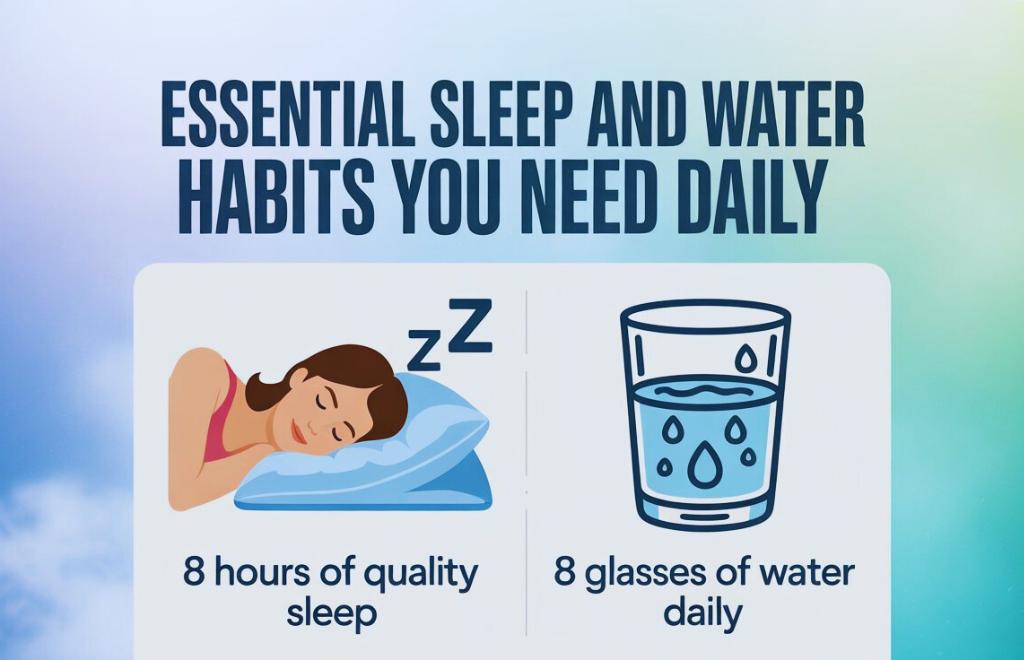
Physical Health Benefits
Better immunity, balanced weight, improved digestion, and steady energy levels come naturally with good sleep and hydration.
Mental and Emotional Benefits
Clear thinking, better mood, lower stress, and emotional stability all improve when sleep and water habits are consistent.
Conclusion
Small habits shape big outcomes. You don’t need extreme routines—just consistent ones. Prioritizing essential sleep and water habits daily is one of the simplest yet most powerful ways to improve your life. Start small. Stay consistent. Your future self will thank you.
FAQs
Can drinking more water improve sleep quality?
Yes. Proper hydration supports body temperature regulation and reduces nighttime discomfort.
Is it bad to drink water before bed?
Small sips are fine. Avoid large amounts to prevent sleep interruptions.
How long before bed should I stop using screens?
Ideally 60 minutes before sleep for better melatonin production.
Does poor sleep affect hydration levels?
Yes. Poor sleep disrupts hormones that regulate thirst and hydration.
Can coffee replace water intake?
No. Coffee can contribute to dehydration if it replaces water entirel









Leave a Comment