
Introduction: The Silent Struggle of Nighttime Breathing Mouth Taping for Sleep Apnea
For millions of individuals worldwide, a restful night’s sleep remains an elusive dream. Sleep apnea, a condition characterized by repeated interruptions in breathing, often leaves sufferers exhausted, irritable, and at risk for long-term health complications.
While CPAP machines and oral appliances are the gold standards of treatment, a new, seemingly simple trend has taken the wellness world by storm: mouth taping for sleep apnea.
The concept is straightforward: by placing a skin-safe adhesive over the lips before bed, you force the body to breathe through the nose. But is this “hack” a legitimate medical breakthrough or a risky social media fad? In this essential guide, we dive deep into the science, the safety, and the reality of using mouth taping for sleep apnea relief today.
Understanding the Mechanics: Why Mouth Breathing Matters
To understand why anyone would tape their mouth shut, we first must look at the biological impact of mouth breathing. Humans are evolutionarily designed to breathe through their noses.
The nasal passages act as a sophisticated filtration and humidification system, warming the air and mixing it with nitric oxide—a vasodilator that helps increase oxygen uptake in the lungs.
When you breathe through your mouth during sleep, the soft tissues in the throat are more likely to collapse, leading to snoring and obstructive events. By exploring mouth taping for sleep apnea, many hope to bypass these collapses and stabilize their airway naturally.
The Science of Nitric Oxide and Nasal Breathing for Mouth Taping for Sleep Apnea
One of the primary arguments for nasal breathing is the production of nitric oxide ($NO$). This molecule plays a critical role in:
- Regulating blood pressure: It relaxes the inner muscles of your blood vessels.
- Immune response: It has antifungal and antibacterial properties.
- Oxygen Efficiency: It improves the lungs’ ability to absorb oxygen from the air.
Mouth taping for sleep apnea aims to maximize these benefits by ensuring the “nasal engine” is running all night long.
Can Mouth Taping Actually Cure Sleep Apnea?
It is vital to distinguish between snoring and Obstructive Sleep Apnea (OSA). While mouth taping may reduce the sound of snoring by preventing the vibration of the soft palate, it is not a “cure” for moderate to severe OSA.
If your apnea is caused by physical obstructions deeper in the throat or neurological signals (Central Sleep Apnea), mouth taping for sleep apnea might only be a supplementary tool rather than a standalone solution. Always consult a sleep specialist before replacing traditional therapies.
The Benefits: What Users Report
Proponents of the practice often cite a “transformative” shift in their energy levels. Reported benefits include:
- Reduced Morning Dry Mouth: Breathing through the mouth evaporates saliva, leading to “cotton mouth” and dental issues.
- Deeper Sleep Cycles: Stabilized breathing can lead to more time spent in REM and deep sleep stages.
- Lower Heart Rate: Nasal breathing activates the parasympathetic nervous system, inducing a state of calm.
Safety First: The Risks of Mouth Taping
While the benefits are tempting, mouth taping for sleep apnea is not without risks. You should never attempt this if:
- You have severe nasal congestion or a deviated septum.
- You have consumed alcohol or sedatives (which suppress the “arousal response” if you stop breathing).
- You suffer from stomach acid reflux (GERD), as there is a risk of aspiration if you vomit.
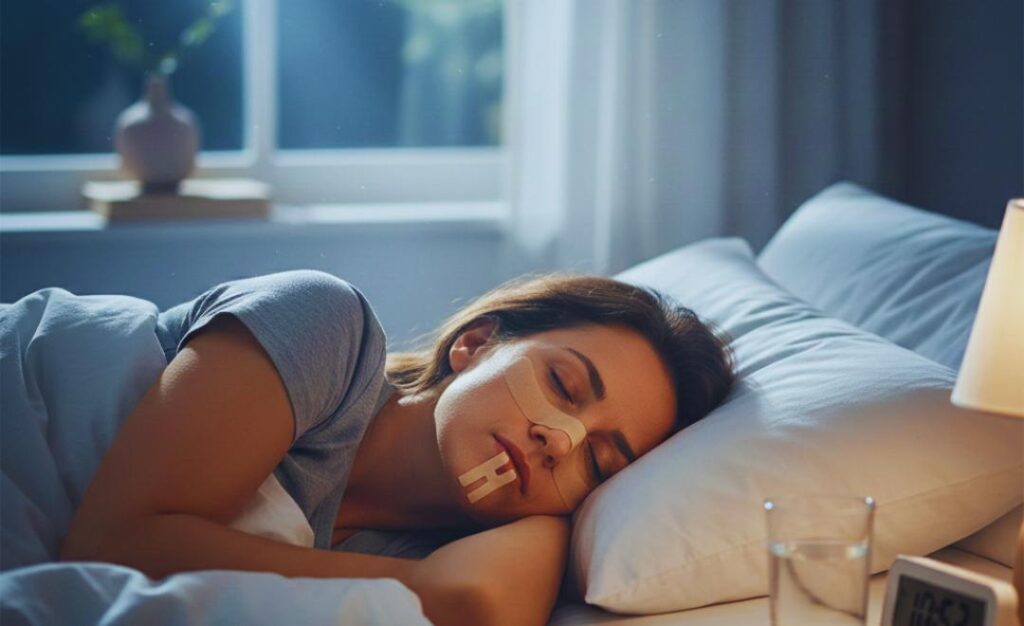
Choosing the Right Tape: Don’t Use Duct Tape!
This is a critical safety point. Using the wrong adhesive can cause skin irritation or make it impossible to breathe in an emergency. Look for:
- Hypoallergenic Surgical Tape: Specifically designed for skin contact.
- Specialized Sleep Strips: Brands like Hostage Tape or Myotape offer “vented” designs or tapes that surround the mouth rather than covering it completely.
Step-by-Step Guide to Starting Safely
If you and your doctor decide to try mouth taping for sleep apnea, follow these steps:
- Daytime Practice: Wear the tape for 15 minutes during the day while reading to get used to the sensation.
- Apply Lip Balm: A thin layer of petroleum jelly or balm around the lips prevents the tape from sticking too harshly.
- The “Vertical” Method: Instead of sealing the whole mouth, place a small strip vertically across the center. This allows for “emergency” breathing through the corners of the mouth.
Mouth Taping vs. CPAP Therapy
For many, the ultimate goal is to get off the CPAP machine. However, mouth taping for sleep apnea should be viewed as a companion, not necessarily a replacement. In fact, many CPAP users use mouth tape to prevent “mouth leak,” where the pressurized air escapes through an open mouth, making the machine ineffective.
Lifestyle Factors That Enhance Success
Mouth taping for sleep apnea works best when combined with other sleep hygiene practices:
- Side Sleeping: Prevents the tongue from falling back into the throat.
- Weight Management: Reducing neck circumference can significantly open the airway.
- Nasal Dilators: Using a nose strip in conjunction with mouth tape ensures maximum airflow.
Conclusion: A Tool in Your Sleep Arsenal
Mouth taping for sleep apnea relief is a fascinating look at how returning to our biological roots—nasal breathing—can impact modern health. While it isn’t a magic wand for everyone, for the right candidate, it can be the missing piece of the puzzle for a restful night.
Stay informed, prioritize safety, and remember that quality sleep is the foundation of a long and healthy life.
Professional Consultation
Note: This article is for informational purposes only. Mouth taping for sleep apnea involves physical intervention with your airway. Before starting this practice, it is essential to consult with a board-certified sleep physician or your primary care doctor.
They can perform a sleep study to ensure you do not have an underlying condition that would make mouth taping dangerous.
FAQs About Mouth Taping for Sleep Apnea
Is mouth taping for sleep apnea safe for children?
No. Children should never have their mouths taped for sleep. Pediatric sleep issues are often related to enlarged tonsils or adenoids and require direct medical intervention.
What happens if I need to cough or sneeze in my sleep?
Most people naturally wake up or the pressure of the cough forces the tape off. However, using a low-residue surgical tape ensures you can easily remove it or open your mouth if needed.
Can I use regular Scotch tape?
Absolutely not. Regular household tapes contain adhesives that are not meant for skin and can cause painful rashes or allergic reactions. Only use hypoallergenic, medical-grade tapes.
When will I notice an improvement in my sleep quality?
While many users report a significant reduction in “brain fog” and morning thirst after their very first night, the timeline varies by individual. Generally, it takes about one to two weeks for your respiratory system to habituate to consistent nasal airflow
Will mouth taping help with my snoring?
Yes, in many cases. Snoring is often the result of air turbulently hitting the soft tissues of the mouth. By forcing air through the nose, many users find their snoring is significantly silenced.









Leave a Comment