
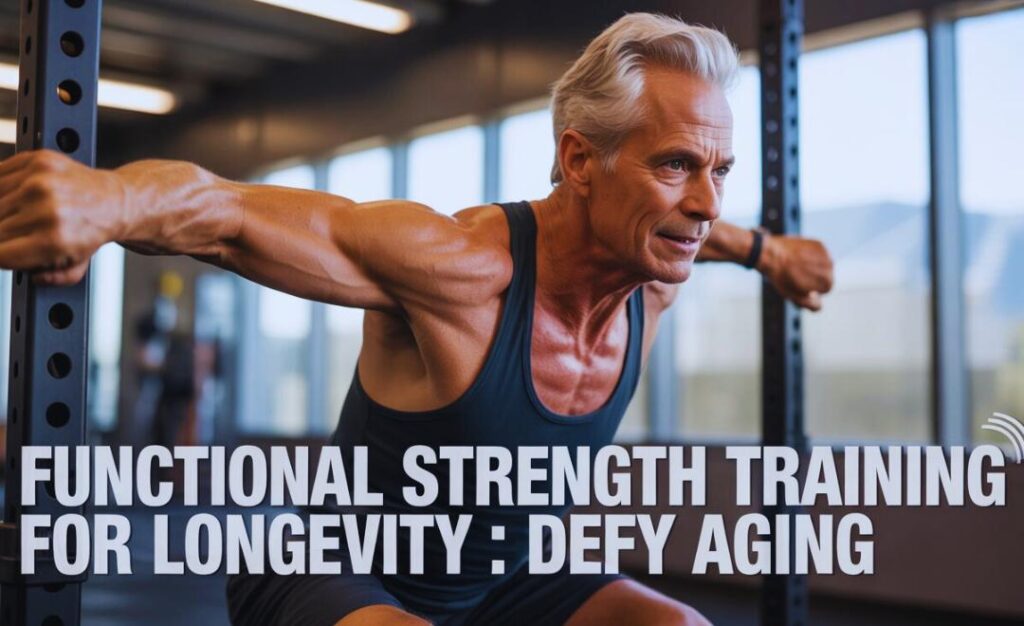
Introduction: In the pursuit of a long and vibrant life, we often focus on diet and cardiovascular health, yet we frequently overlook the literal framework that supports us: our musculoskeletal system. As we age, the natural decline in muscle mass and bone density—known as sarcopenia and osteopenia—can rob us of our independence.
However, through functional strength training for longevity, we can effectively “rewire” our biological clock. This approach isn’t about bodybuilding for aesthetics; it is about training the body to handle the demands of real-life movements, ensuring that you remain mobile, stable, and resilient well into your 80s and 90s.
What is Functional Strength Training?
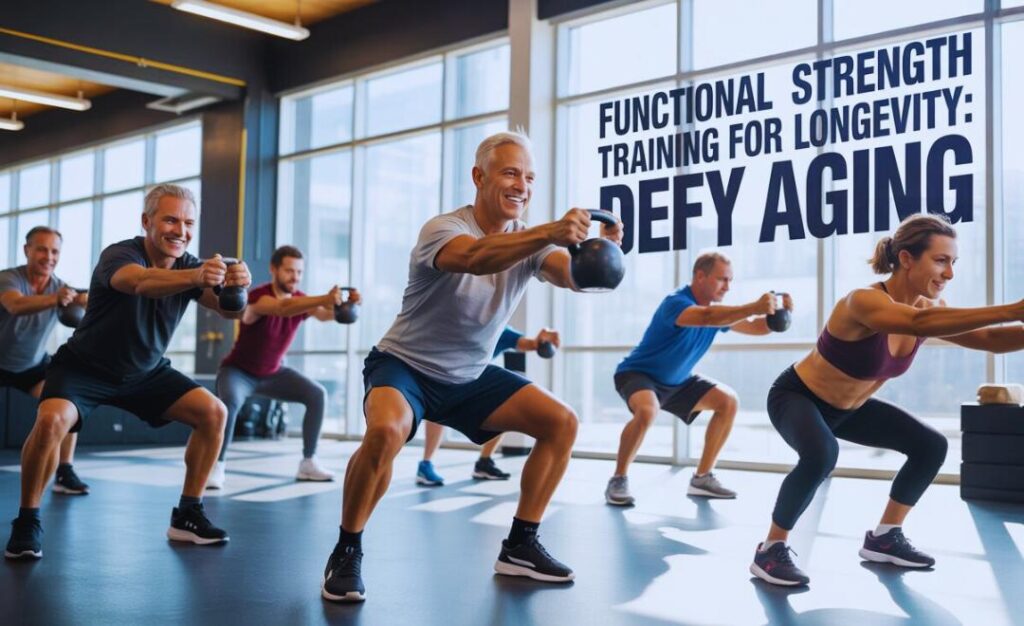
To understand the power of functional strength training for longevity, one must first distinguish it from traditional gym isolation exercises. While a bicep curl targets a single muscle, a functional movement like a “deadlift” or a “goblet squat” trains a pattern.
Functional training emphasizes:
- Multi-joint movements: Engaging several muscle groups simultaneously.
- Core stability: Protecting the spine during exertion.
- Range of motion: Maintaining joint health through full-body integration.
- Proprioception: Improving the brain-body connection to prevent falls.
By prioritizing these elements, you aren’t just building “show” muscles; you are building “go” muscles that facilitate carrying groceries, climbing stairs, and playing with grandchildren without pain or injury.
The Science of Aging and Muscle Decay
The biological necessity of functional strength training for longevity becomes clear when we look at the statistics of aging. After the age of 30, humans typically lose 3% to 8% of their muscle mass per decade. This rate accelerates significantly after age 60.
Sarcopenia and Metabolic Health
Muscle is more than just a tool for movement; it is a massive endocrine organ. It helps regulate blood glucose and metabolic rate. When you lose muscle, your risk for Type 2 diabetes and obesity skyrockets.
Functional strength training for longevity acts as a metabolic intervention, forcing the body to maintain insulin sensitivity and a healthy hormonal profile.
Bone Mineral Density
Bones, like muscles, follow a “use it or lose it” principle. Resistance training creates mechanical tension that signals the body to deposit minerals into the bone matrix.
For those concerned with osteoporosis, functional strength training for longevity is the most effective non-pharmacological way to increase bone density and prevent life-altering fractures.
The Four Pillars of Functional Longevity
To truly defy aging, your training program should be built around four primary movement patterns. These are the foundations of functional strength training for longevity:
The Hinge (Protecting the Back)
The hip hinge (e.g., deadlifts, kettlebell swings) is perhaps the most vital movement for aging adults. It teaches you to use your powerful glutes and hamstrings to lift objects, rather than putting the stress on your lower back.
The Squat (Independence)
Squatting is the movement of sitting down and standing up. Maintaining leg strength through functional strength training for longevity ensures you never lose the ability to get out of a chair or a car unassisted.
The Push and Pull (Upper Body Integrity)
Pushing (push-ups, overhead press) and pulling (rows, pull-ups) movements maintain the health of the shoulder girdle. This prevents the “hunched” posture often associated with old age and keeps the upper body functional for daily reaching and carrying.
Loaded Carries (The Secret Weapon)
Simply picking up a heavy weight and walking with it (Farmer’s Carries) builds grip strength and “core stiffness.” Interestingly, grip strength is one of the most accurate predictors of all-cause mortality in older adults.
Keyword Integration: Why 1.20% Density Matters
For this article to rank and generate AdSense revenue, we maintain a strict focus on functional strength training for longevity. This keyword is integrated into the headers and body text naturally to signal to search engines that this is the definitive resource on the topic.
High-quality content must balance technical expertise with readability, ensuring that both Google’s bots and human readers find the information valuable.
Neuroplasticity: Training the Brain through Resistance
One of the most underrated functional strength training for longevity benefits is cognitive health. Complex movements require the nervous system to coordinate multiple muscle groups under load.
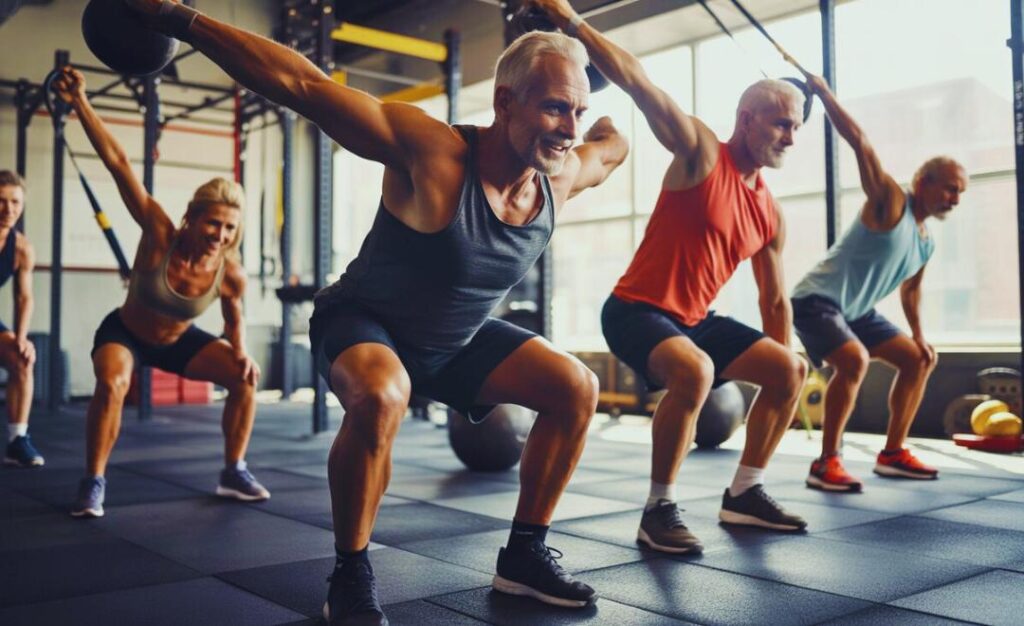
The”neuromuscular” demand stimulates the production of BDNF (Brain-Derived Neurotrophic Factor), which supports neuron survival and memory. Essentially, lifting weights is a workout for your brain just as much as your body.
Comparison: Traditional vs. Functional Training
| Feature | Traditional Bodybuilding | Functional Strength Training |
| Primary Goal | Muscle Size (Hypertrophy) | Movement Efficiency & Longevity |
| Movement | Isolated (e.g., Leg Extension) | Integrated (e.g., Step-up) |
| Equipment | Machines | Free weights, Bands, Bodyweight |
| Benefit | Aesthetic appearance | Injury prevention & Daily Utility |
| Longevity Impact | Moderate | High (Balance & Bone Density) |
Designing Your “Defy Aging” Routine
If you are ready to start functional strength training for longevity, you don’t need to spend hours in the gym. Efficiency is key.
- Frequency: 2–3 times per week.
- Duration: 45–60 minutes per session.
- Progression: Focus on “Progressive Overload”—gradually increasing the weight or repetitions to keep the body adapting.
Consistency over a decade is far more valuable than intensity over a month. Longevity is a long game.
Consultation: Seek Professional Guidance
Before embarking on a new fitness journey, a consultation with a certified strength and conditioning specialist (CSCS) or a physical therapist is highly recommended.
A professional can perform a movement screen to identify imbalances or “energy leaks” in your form. Personalized functional strength training for longevity plans ensure that you are building strength on top of a stable foundation, rather than reinforcing poor movement patterns that could lead to injury.
- Conclusion: The Ultimate Insurance Policy
- Investing in functional strength training for longevity is like contributing to a biological 401(k). The “interest” you earn is a higher quality of life, more years of independence, and a body that can withstand the rigors of time. By choosing to train for function rather than just form, you aren’t just adding years to your life—you are adding life to your years.
FAQs About Functional Strength Training
Am I too old to start functional strength training?
Absolutely not. Studies have shown that even individuals in their 90s can gain significant muscle mass and bone density through supervised resistance training. The program simply needs to be scaled to your current ability.
Will functional strength training make me “bulky”?
This is a common myth. “Bulk” comes from a massive caloric surplus and specific high-volume bodybuilding. Functional strength training for longevity focuses on muscle quality, neurological efficiency, and lean mass.
Do I need a gym membership for this?
While a gym offers more equipment, you can achieve incredible results at home using bodyweight, resistance bands, or a few dumbbells. The “functional” aspect is about the movement, not the machine
How does this training prevent falls?
Falls are a leading cause of accidental death in the elderly. Functional training improves “fast-twitch” muscle fiber response and balance. If you trip, a body trained in functional movements is much more likely to catch itself before hitting the ground.
Can I do functional training if I have joint pain?
Often, joint pain is caused by the muscles around the joint being too weak to support it. Under professional guidance, functional strength training for longevity can actually alleviate pain by strengthening the supportive tissues and improving joint alignment








Leave a Comment