
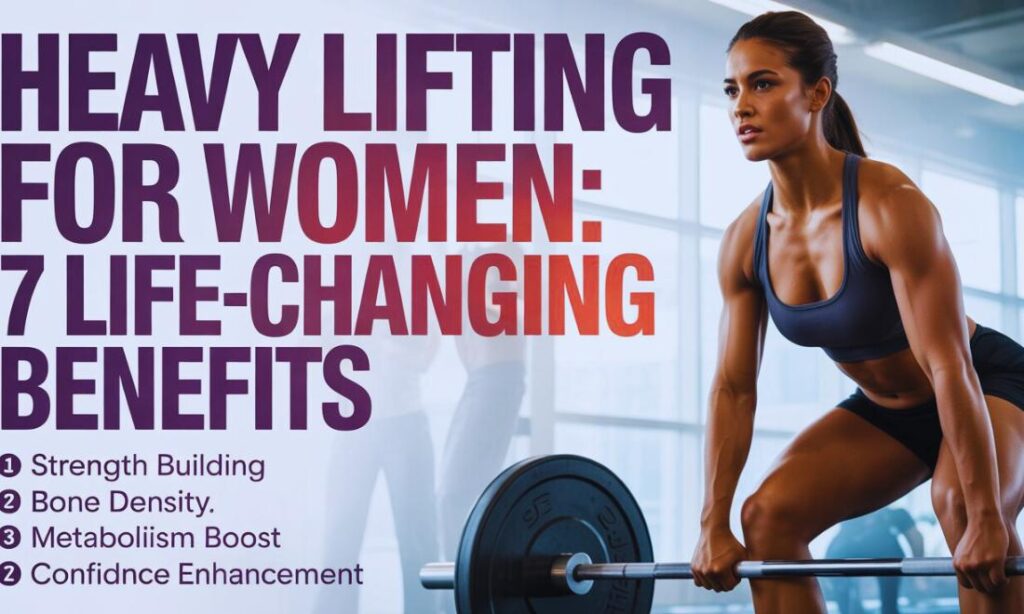
Introduction: For decades, the fitness industry pushed a specific narrative for women: stay away from the heavy weights unless you want to “bulk up.” Instead, women were directed toward pink dumbbells, endless hours of steady-state cardio, and yoga mats. However, a seismic shift is happening in gyms worldwide.
Women are reclaiming the squat rack and discovering that lifting heavy for women is not about becoming “manly”—it is about unlocking a level of physical and mental empowerment that cardio alone simply cannot provide.
The science is clear: strength training is one of the most effective interventions for longevity, metabolic health, and confidence. When we talk about lifting heavy for women, we are referring to progressive resistance training that challenges the musculoskeletal system.
This article explores the transformative power of the barbell and why picking up heavy weights might be the best decision you ever make for your health.
Accelerated Fat Loss and Metabolic Fire
One of the primary reasons women shy away from the weight room is the fear of gaining weight. In reality, lifting heavy for women is the ultimate tool for body recomposition.
While cardio burns calories during the activity, heavy strength training creates an “afterburn” effect known as Excess Post-exercise Oxygen Consumption (EPOC).
When you lift heavy, you create micro-tears in your muscle fibers. Your body requires a significant amount of energy to repair these tissues, meaning your metabolism remains elevated for up to 72 hours after your workout. Furthermore, muscle tissue is more metabolically active than fat.
By increasing your lean muscle mass through lifting heavy for women, you increase your basal metabolic rate (BMR), allowing you to burn more calories even while you sleep.
Bone Density and Osteoporosis Prevention
Women are statistically at a higher risk for osteoporosis and osteopenia as they age, particularly after menopause due to declining estrogen levels. One of the most vital benefits of lifting heavy for women is the mechanical stress it places on the bones.
According to Wolff’s Law, bone grows and remodels in response to the forces that are placed upon it. When you perform heavy compound movements like deadlifts or squats, the tension pulls on the bone, signaling the body to deposit more calcium and minerals.
Lifting heavy for women is essentially an insurance policy for your skeletal system, ensuring you remain mobile and fracture-free well into your golden years.
Hormonal Balance and Insulin Sensitivity
There is a common misconception that lifting weights will cause a spike in testosterone that leads to a masculine physique. In truth, women do not have the testosterone levels required to “bulk” naturally. Instead, lifting heavy for women helps balance hormones like growth hormone and insulin.
Strength training improves insulin sensitivity, which is crucial for managing blood sugar levels and preventing Type 2 diabetes.
By lifting heavy, your muscles become more efficient at absorbing glucose, reducing the amount of insulin your pancreas needs to produce. This hormonal optimization makes it easier to maintain a healthy weight and reduces systemic inflammation.
Enhanced Functional Strength for Daily Life
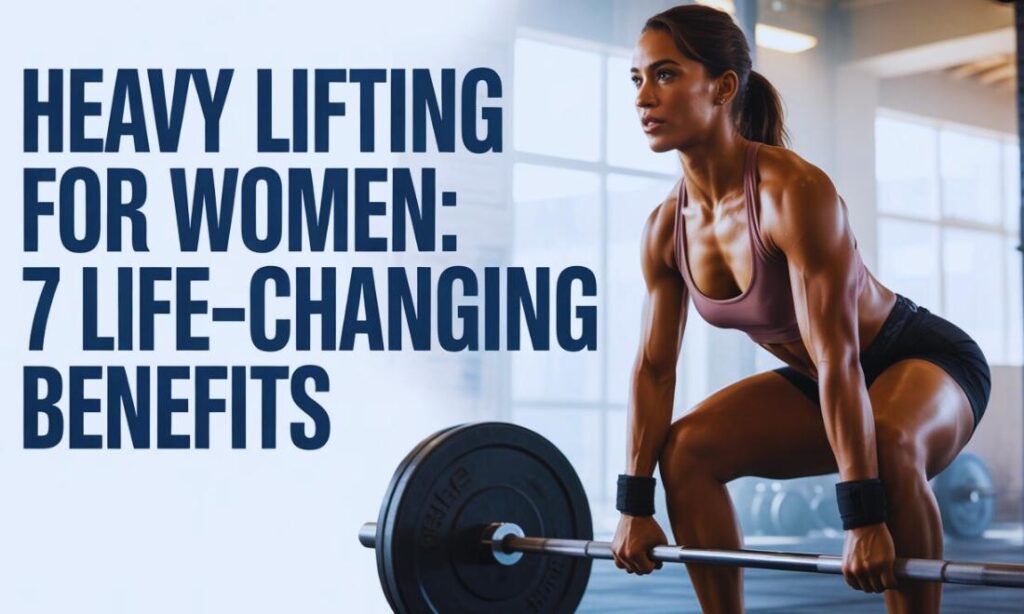
Fitness isn’t just about how you look in the mirror; it’s about how you move through the world. Lifting heavy for women translates directly to “functional” strength.
Whether it’s carrying all the grocery bags in one trip, lifting a suitcase into an overhead bin, or picking up a growing child, a strong posterior chain makes life easier.
When you prioritize lifting heavy for women, you develop core stability and grip strength. This reduces the likelihood of everyday injuries, such as straining your back while reaching for an object or losing your balance. True independence comes from the physical capability to handle your own environment.
Cardiovascular Health and Longevity
While the “cardio vs. weights” debate persists, research shows that heavy lifting provides significant cardiovascular benefits. High-intensity resistance training can lower blood pressure and improve cholesterol profiles.
By lifting heavy for women, you strengthen the heart muscle and improve blood flow. Studies have shown that individuals with higher muscle mass have a lower risk of cardiovascular disease.
Incorporating heavy sets into your routine ensures that you are working your most important muscle—the heart—without the repetitive joint stress that often comes with long-distance running.
Mental Resilience and Confidence
The psychological shift that occurs when a woman realizes she can lift 200 pounds off the ground is profound. Lifting heavy for women fosters a “growth mindset.” It teaches you that struggle is a prerequisite for progress and that you are capable of doing hard things.
This confidence often spills over into professional and personal lives. The discipline required to stick to a heavy lifting program builds mental grit. Moreover, strength training releases endorphins and dopamine, which are natural mood lifters, making lifting heavy for women a powerful tool in managing anxiety and depression.
Improved Posture and Reduced Chronic Pain
In our modern world of “tech neck” and desk-bound jobs, postural issues are rampant. Many women suffer from lower back pain or rounded shoulders. Lifting heavy for women targets the “posterior chain”—the muscles along the back of your body, including the glutes, hamstrings, and erector spinae.
Strengthening these muscles pulls the body back into its natural alignment. A strong back supports the spine, significantly reducing chronic aches and pains. When you engage in lifting heavy for women, you are training your body to hold itself with pride and structural integrity.
Consultation: How to Get Started Safely
If you are new to the world of iron, the transition can feel intimidating. Before diving into a heavy program, consider the following:
- Prioritize Form: Never sacrifice technique for weight. Start with a coach to learn the fundamentals of the “Big Three” (Squat, Bench, Deadlift).
- Progressive Overload: You don’t need to lift the heaviest weight on day one.
- Recovery is Key: Muscle grows while you rest, not while you train. Ensure you are getting 7–9 hours of sleep and eating sufficient protein.
FAQs
Will lifting heavy make me look “bulky”?
No. Women lack the high levels of testosterone necessary to build massive muscle mass naturally. Lifting heavy for women typically results in a lean, “toned,” and athletic appearance.
How many times a week should I lift heavy?
For most women, 3 to 4 days of heavy strength training per week is the “sweet spot” to allow for adequate recovery while still seeing significant gains.
Is lifting heavy safe for my joints?
Yes, when done with proper form. In fact, lifting heavy for women strengthens the ligaments and tendons surrounding the joints, which actually protects them from future injury.
Can I lift heavy if I am over 50?
Absolutely. In fact, it is highly recommended. Strength training is the most effective way to combat age-related muscle loss (sarcopenia) and maintain bone density.
Do I need to take supplements like creatine?
While not mandatory, supplements like whey protein and creatine can support the recovery process and help you get the most out of your sessions.









Leave a Comment