
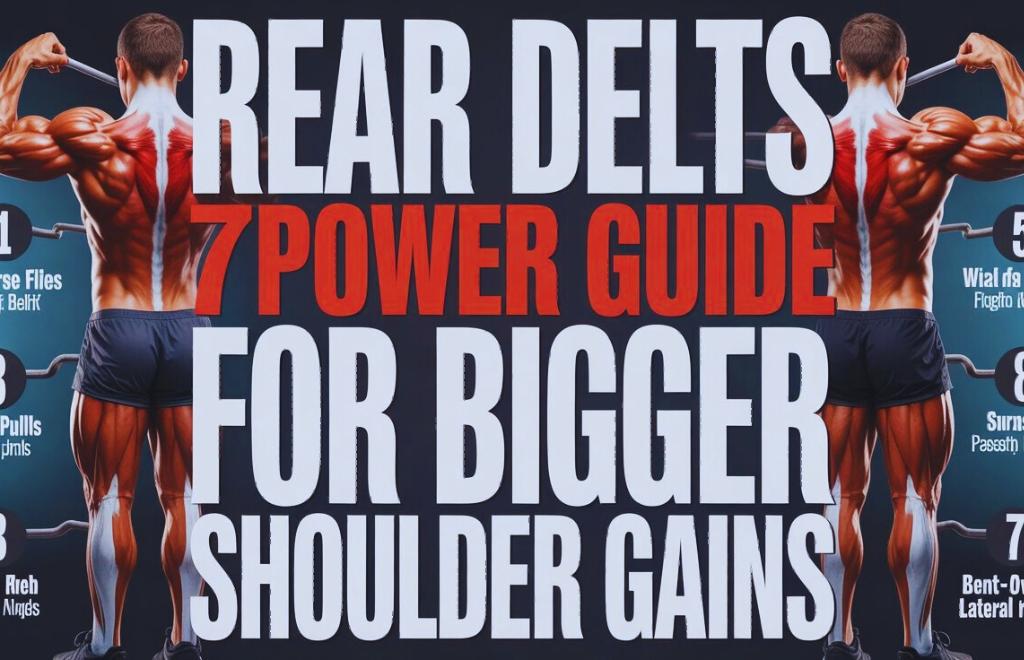
Mastering your rear delts is the difference between having flat shoulders and achieving that sought-after “3D” cannonball look. While many lifters obsess over heavy overhead presses for the front and side heads, the posterior deltoid is frequently neglected, leading to poor posture and increased injury risk. This comprehensive guide uncovers the seven essential power secrets to isolating these stubborn muscles, ensuring your shoulder training is balanced, functional, and visually dominant.
Shutterstock
The Anatomy of the Posterior Deltoid
Before diving into the movements, we must understand the mechanics. The rear delts originate on the spine of the scapula and insert into the humerus. Their primary functions are horizontal abduction, external rotation, and extension of the shoulder.
Because they are relatively small muscles compared to the lats or traps, they are easily “overpowered” during back workouts. To truly grow your rear delts, you must learn to move the weight using the shoulder joint alone, rather than retracting the shoulder blades with the mid-traps.

1. The Mind-Muscle Connection Secret
The biggest hurdle in training rear delts is the tendency for the rhomboids and traps to take over the movement. To isolate the posterior head, you must visualize your elbow as the primary lever. Instead of “pulling” the weight with your hands, think about “pushing” your elbows out to the side walls. Reducing the weight and focusing on a slow, controlled eccentric (lowering) phase will do more for hypertrophy than swinging heavy dumbbells.
2. High-Volume Protocol for Growth
Unlike the front delts, which receive massive stimulation during chest and shoulder pressing, the rear delts respond exceptionally well to high volume and high frequency.
Because they are primarily composed of slow-twitch muscle fibers, they can handle—and actually require—higher rep ranges. Aiming for 15–25 reps per set helps create the metabolic stress necessary for sarcoplasmic hypertrophy.
3. The “Pinkies Out” Grip Technique
A small but “power” adjustment to your grip can shift the tension directly onto the rear delts. When performing reverse flies or face pulls, try rotating your hands so your pinkies are pointing outward or upward.

This slight external rotation aligns the muscle fibers of the posterior deltoid perfectly with the line of pull, minimizing the involvement of the lateral delt and ensuring the back of the shoulder does the heavy lifting.
4. Face Pulls: The King of Rear Delt Exercises
If you aren’t doing face pulls, you are leaving gains on the table. This movement is a staple for rear delts because it combines horizontal abduction with external rotation.
To maximize the effectiveness, pull the rope towards your forehead and imagine “double-bicep” flexing at the peak of the movement. This not only builds size but also improves rotator cuff health and overall shoulder stability.
5. Utilizing Constant Tension with Cables
While dumbbells are great, they have a “dead zone” at the bottom of the movement where there is zero tension on the rear delts. Cables provide a constant resistance curve throughout the entire range of motion.
By using a cable cross-over machine for reverse flies, you keep the muscle under tension from the very start to the absolute peak contraction, leading to better blood flow and muscle fiber recruitment.
6. The 45-Degree Lean
When performing standing lateral raises or flies, many lifters stand too upright. By adding a slight 45-degree forward lean (or using an incline bench for support), you change the gravity’s pull to favor the rear delts. Chest-supported rows or flies are particularly effective because they eliminate momentum and prevent you from using your lower back to “cheat” the weight up.
7. Strategic Workout Placement
Most people train rear delts at the very end of a long shoulder or back session when energy is depleted. To prioritize growth, try “pre-exhausting” them. Perform 3–4 sets of isolated rear delt work at the beginning of your workout.
By the time you move to your heavy compound rows or presses, the rear delts will already be fully activated and engorged with blood, forced to work even harder during the big lifts.
Conclusion: A Consultation for Your Physique
Achieving balanced shoulder development requires more than just lifting heavy; it requires a strategic approach to isolation. If you find your shoulders look “rolled forward” or lack width from the side profile, it is time for a consultation with your training program.

Focus on the nuances of form over the ego of the weight. By implementing these seven power strategies, you will not only see bigger rear delts but also experience improved posture and long-term joint health.
Frequently Asked Questions (FAQs)
How many times a week should I train my rear delts?
Since they recover quickly, you can train rear delts 2–3 times per week. Many athletes add a few sets of face pulls to every upper-body day to maintain shoulder health and volume.
Why do I feel my traps more than my rear delts?
This usually happens because you are retracting your shoulder blades too much. Keep your scapula relatively still and focus on moving only the upper arm bone (humerus) out to the side.
Can I grow rear delts with just compound movements?
While heavy rows and pull-ups hit the rear delts, most people need direct isolation work to achieve maximum hypertrophy and the “3D” look, as back muscles often dominate compound pulls.
What is the best rep range for posterior deltoid growth?
Because they are postural muscles, they thrive in the 12–20 rep range. Focus on the “burn” and the pump rather than maximum strength (1–5 reps).
Is it safe to train rear delts if I have a shoulder impingement?
Actually, strengthening the rear delts is often recommended for impingement, as it helps pull the shoulders back and opens up the subacromial space. However, always consult a physical therapist before starting a new routine if you have an active injury.










Leave a Comment