

In the hyper-competitive landscape of 2026, the boundary between human potential and technological enhancement is blurring. Brain stimulation, once a niche medical intervention for neurological disorders, has migrated from sterile clinical labs to the home offices of Silicon Valley and beyond.
Whether through electrical currents, magnetic pulses, or specialized sound frequencies, the promise is intoxicating: an instant “genius boost.” But as we push the limits of our cognitive architecture, a critical question emerges:
Are we unlocking hidden brilliance, or are we flirting with permanent neurological risk? This comprehensive exploration uncovers the 7 secrets of modern neuro-enhancement.
The Electrical Spark: Understanding to DCS
The most accessible form of brain stimulation today is Transcranial Direct Current Stimulation (tDCS). This involves applying a low-level electrical current to specific areas of the scalp. The “secret” here isn’t that it creates new intelligence, but rather that it changes the “resting membrane potential” of neurons.
By making neurons more likely to fire, tDCS can accelerate learning and memory consolidation. Proponents of brain stimulation suggest that a 20-minute session can prime the motor cortex for skill acquisition, effectively shortening the “10,000-hour rule.” However, the risk lies in “off-target effects”—stimulating one area may inadvertently inhibit another, leading to a temporary loss of verbal fluency or emotional regulation.
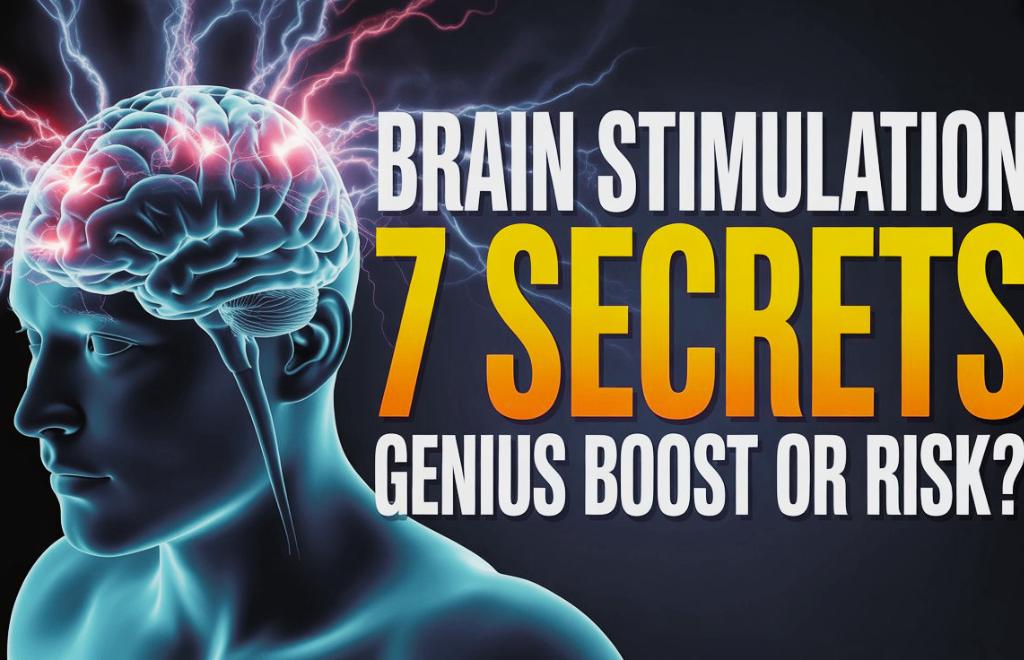
Secret #1: The Flow State Shortcut
The first major secret of brain stimulation is its ability to induce a “Flow State” on command. By targeting the Prefrontal Cortex (PFC), certain stimulation protocols can quiet the “inner critic”—that nagging voice of self-doubt. When the PFC is down-regulated through inhibitory brain stimulation, the user often experiences a surge in creativity and a loss of the sense of time.
While this provides a massive productivity boost, the long-term risk involves the brain becoming “lazy,” potentially losing its natural ability to enter flow without an external trigger.
Secret #2: Rapid Neuroplasticity
Brain stimulation triggers BDNF, a protein that acts like “fertilizer” for your neurons. While this accelerates learning and recovery, the risk is “maladaptive plasticity,” where the brain forms inefficient or incorrect neural connections if overstimulated.
Secret #3: The “Deep Sleep” Hack
Not all brain stimulation is about being awake and alert. One of the best-kept secrets in the industry is the use of Transcranial Alternating Current Stimulation (tACS) to mimic slow-wave sleep patterns. By syncing the brain’s electrical activity to a specific frequency (usually around 0.5 to 4 Hz), users can achieve the restorative benefits of eight hours of sleep in significantly less time. The risk?
Disrupting the natural circadian rhythm can lead to hormonal imbalances and long-term insomnia if the device is used incorrectly.
Secret #4: The Unregulated DIY Danger
A major secret in the biohacking community is the hidden physical risk of home-made brain stimulation kits. Without medical-grade sensors and precise current limiters, users face “Skin Burn Risk” and “Shunting.” Shunting occurs when the electrical current travels across the moisture on your skin rather than penetrating the skull to reach the brain.
This not only renders the brain stimulation useless but can lead to localized scalp irritation or even minor electrical burns, proving that professional-grade equipment is essential for safety.
Secret #5: Cognitive Enhancement vs. Personality Shift
Can brain stimulation change who you are? Recent studies suggest that stimulating the Right Temporoparietal Junction (rTPJ) can actually influence moral judgment and empathy. The secret risk here is the “Personality Blur.” If you use brain stimulation to become more logical for work, you might inadvertently become less empathetic in your personal relationships. The ethical implications of “editing” one’s personality for professional gain are a major hurdle for the future of the technology.
Secret #6: The Hidden Cost of “The Genius Boost”
Every “boost” has a metabolic cost. When you use brain stimulation to overclock your cognitive functions, you deplete your stores of glucose and neurotransmitters like dopamine and acetylcholine much faster.
Users often report a “neural crash” 24 hours after a session. Without proper nutritional support—think high-quality fats and amino acids—this genius boost can lead to severe burnout.
Secret #7: The Longevity Connection
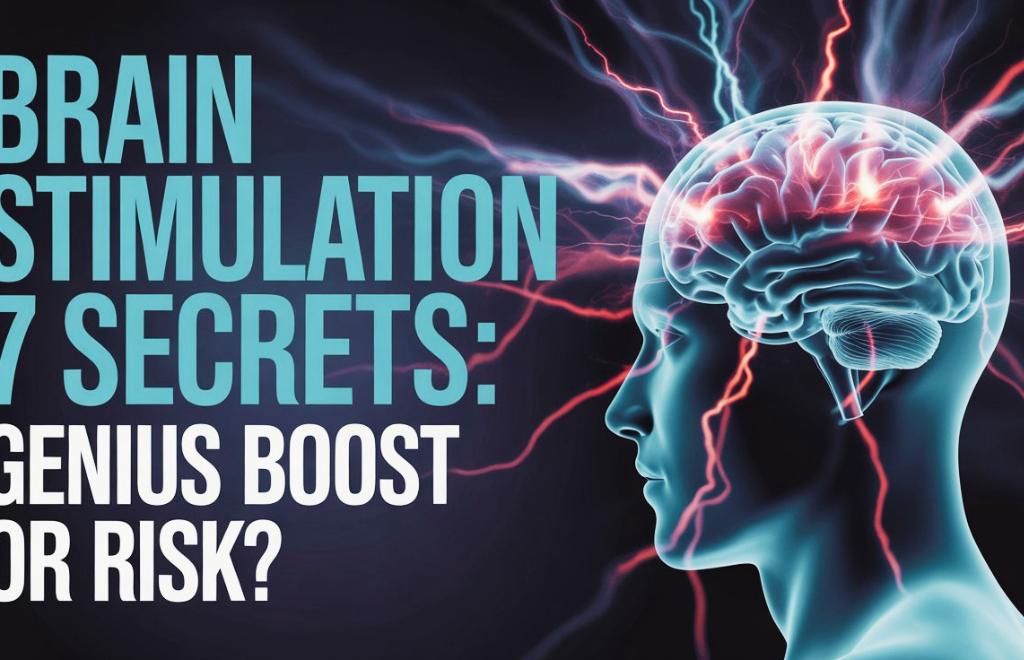
The final secret is the potential for brain stimulation to ward off age-related cognitive decline. By maintaining the “firing rate” of neurons in the hippocampus, regular, low-intensity stimulation may delay the onset of memory loss. However, the risk of “over-stimulation” in an aging brain could lead to excitotoxicity, where neurons are essentially worked to death.
The Technology: Modern Modalities of Brain Stimulation
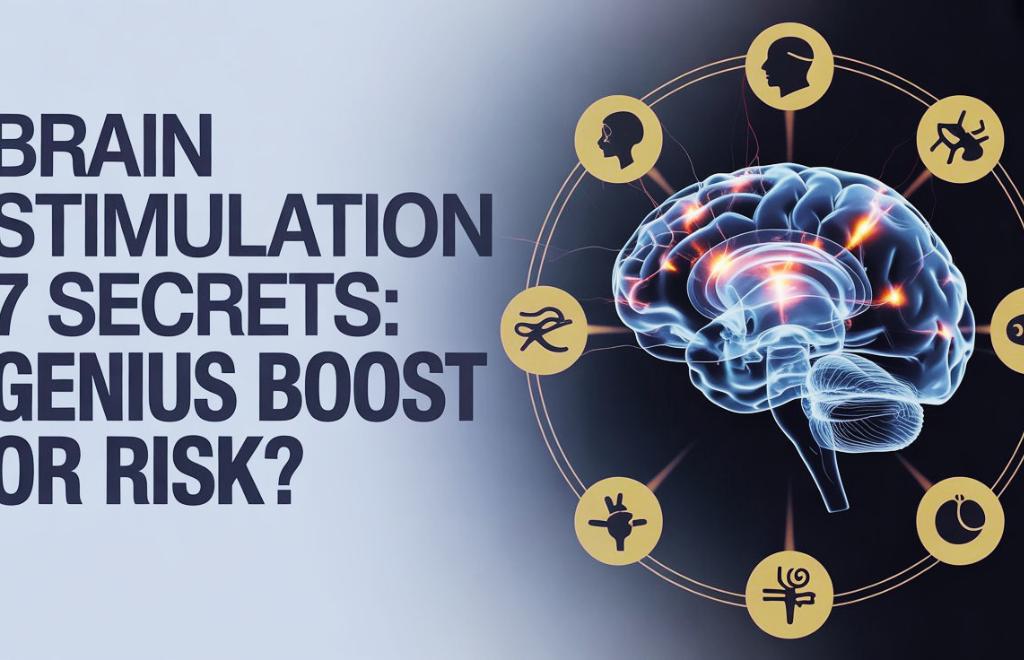
To understand the full scope of brain stimulation, we must look at the different tools available in 2026:
| Method | Mechanism | Primary Use | Risk Level |
| tDCS | Constant Low Current | Learning & Focus | Moderate (DIY risks) |
| tACS | Oscillating Current | Sleep & Mood | Low to Moderate |
| TMS | Magnetic Pulses | Depression & OCD | High (Clinical only) |
| Binaural Beats | Auditory Frequencies | Relaxation | Very Low |
| Vagus Nerve | Peripheral Stimulation | Inflammation & Stress | Low |
Consultation: Are You a Candidate for Brain Stimulation?
Before you hook yourself up to a device, consider this professional checklist:
- Medical History: Do you have a history of epilepsy or seizures? If so, brain stimulation is strictly contraindicated.
- Metal Implants: Any metal in the skull or near the head (including pacemakers) makes most electrical stimulation dangerous.
- Goal Alignment: Are you looking for a temporary edge or a long-term solution? Brain stimulation should never be a substitute for fundamental habits like sleep, hydration, and exercise.
- Professional Oversight: Always seek a consultation with a neurologist or a certified neuro-technician before attempting high-voltage or magnetic protocols.
Conclusion: Genius Boost or Risk?
The era of brain stimulation is here to stay. When used under professional guidance and with high-quality equipment, it offers a legitimate “genius boost” by enhancing focus, accelerating learning, and improving sleep quality.
However, the risks—ranging from physical burns to long-term personality shifts and neural exhaustion—are real. To truly benefit from brain stimulation, one must treat the brain with the respect it deserves: not as a machine to be hacked, but as a complex ecosystem to be nurtured.
Frequently Asked Questions (FAQ)
Is brain stimulation permanent?
Most effects of non-invasive brain stimulation (like tDCS) are temporary, lasting from a few hours to a couple of days. However, repeated sessions over weeks can lead to “Long-Term Potentiation” (LTP), which creates more lasting changes in neural pathways.
Can I use brain stimulation to treat ADHD?
There is significant research suggesting that brain stimulation targeting the Prefrontal Cortex can improve attention and reduce impulsivity. However, it is not yet a standard FDA-approved replacement for traditional medication.
Does it hurt?
Most users describe the sensation of electrical brain stimulation as a mild tingling, itching, or “static” feeling on the scalp. If you feel pain, the current is likely too high or the electrodes are poorly placed.
4. How often should I use these devices?
For safe brain stimulation, sessions should be limited to 20 minutes, no more than 3 to 5 times per week. Daily use can lead to “homeostatic scaling,” where the brain builds a resistance to the current, rendering the “genius boost” ineffective and increasing the risk of neural fatigue.
How often should I use these devices?
For cognitive enhancement, most protocols recommend no more than 20 minutes a day, 3-5 times a week. Overuse can lead to “homeostatic scaling,” where the brain fights back against the stimulation, making it less effective.
Are there “brain stimulation” methods that don’t involve electricity?
Yes. Auditory stimulation (Binaural Beats), Photobiomodulation (using near-infrared light), and even specific meditation techniques are considered forms of non-invasive brain stimulation that carry much lower risks









Leave a Comment