

Introduction
Let’s face it: turning 40 doesn’t feel like it used to. You might notice that your energy dips faster, your waistline sneaks up, and getting up from the couch feels like a mini workout. But here’s the good news—strength training can be your secret weapon. It’s not just for bodybuilders or young athletes. Men over 40 can dramatically improve their health, physique, and even mental sharpness by embracing strength training now.
Understanding the Aging Process in Men
Muscle Mass Decline with Age
After 40, men naturally lose muscle mass—about 3–5% per decade. This isn’t just cosmetic; weaker muscles can affect mobility, balance, and overall strength. Strength training combats this decline effectively.
Hormonal Changes and Testosterone Drop
Testosterone, a key hormone for building muscle, declines with age. Reduced testosterone leads to less energy, slower recovery, and more fat storage. Lifting weights can naturally boost testosterone levels and improve vitality.
Metabolism Slows Down
Your metabolism gradually slows, making it easier to gain weight even without increasing food intake. Strength training revs up your metabolism by building lean muscle, which burns more calories at rest.
What is Strength Training?
Definition and Importance
Strength training, or resistance training, involves exercises that improve muscular strength and endurance. It doesn’t just bulk you up—it protects your joints, boosts metabolism, and improves overall health.
Types of Strength Training
Free Weights
Using dumbbells or barbells engages multiple muscles and promotes functional strength.
Resistance Bands
Great for beginners or those with joint issues, they offer variable resistance and are portable.
Bodyweight Exercises
Push-ups, squats, and planks use your own body weight for resistance and can be done anywhere.
Benefits of Strength for Men Over 40
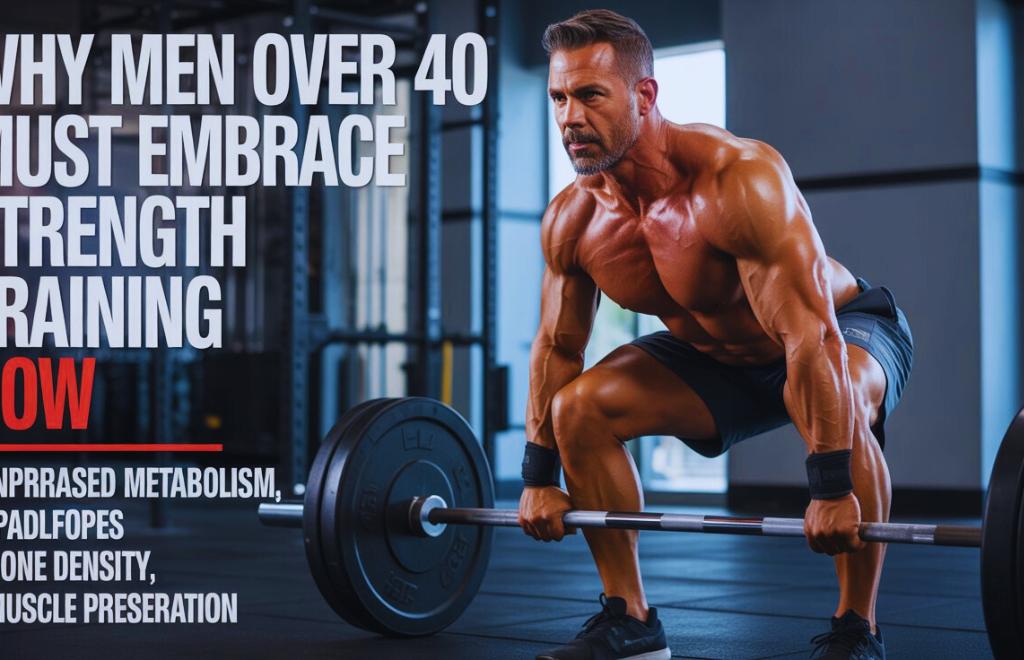
Improves Muscle Mass and
You’ll feel more capable in daily life—lifting groceries, climbing stairs, or playing with your kids won’t feel like a chore.
Boosts Metabolism and Weight Management
More muscle means more calories burned, even when you’re binge-watching your favorite series.
Enhances Bone Density
Weight-bearing exercises reduce the risk of osteoporosis and fractures.
Supports Heart Health
Stronger muscles and improved circulation reduce the risk of heart disease and high blood pressure.
Improves Mental Health and Mood
Strength training releases endorphins, improves sleep, and can fight off anxiety and depression.
Common Myths About Strength Training After 40
Myth 1: “It’s Too Late to Start”
Age is just a number. Studies show men in their 60s or even 70s can gain significant muscle with proper training.
Myth 2: “Weights Make You Bulky”
Building massive muscles naturally is hard after 40. Strength training will make you lean, toned, and functional, not Hulk-like.
Myth 3: “Cardio is Enough”
Cardio improves heart health, but it doesn’t prevent muscle loss. Strength training fills this gap perfectly.

How to Start Strength Safely
Assess Your Current Fitness Level
Check your flexibility, balance, and endurance before starting.
Consult a Professional
A certified trainer can teach correct form and create a routine tailored to your needs.
Start Slow and Focus on Form
Avoid injuries by mastering technique first, then gradually increase intensity.
Sample Strength Routine for Men Over 40
Warm-Up Exercises
5–10 minutes of light cardio or dynamic stretching prepares your muscles.
Beginner-Friendly Weight Training
- Dumbbell bench press: 3 sets × 10 reps
- Squats: 3 sets × 12 reps
- Lat pulldown: 3 sets × 10 reps
Core and Balance Workouts
- Planks: 3 × 30 seconds
- Side leg raises: 3 × 12 reps
Cool Down and Stretching
Static stretches prevent soreness and improve flexibility.
Nutrition Tips to Support Strength
Protein Intake
Aim for 1.2–1.6 grams of protein per kg of body weight daily to support muscle repair.
Healthy Fats and Carbs
Include avocados, nuts, whole grains, and fruits for sustained energy.
Hydration and Supplements
Drink plenty of water and consider vitamin D or creatine if needed.
Staying Consistent and Motivated

Setting Realistic Goals
Focus on strength gains, improved mobility, or energy levels instead of just aesthetics.
Tracking Progress
Use a journal or app to log workouts and monitor improvement.
Joining a Community or Partner Workout
Working out with friends increases accountability and fun.
Overcoming Common Challenges
Dealing with Soreness
Muscle soreness is normal; use light stretching and foam rolling to alleviate it.
Avoiding Injuries
Prioritize proper form, avoid sudden heavy lifting, and allow rest days.
Staying Motivated
Mix routines, set small milestones, and reward yourself for consistency.
Real-Life Success Stories
Many men over 40 have transformed their lives with strength training. From dropping weight to gaining confidence and energy, their stories prove that it’s never too late to start.
The Long-Term Impact of Strength Training
Longevity and Quality of Life
Stronger muscles and bones improve mobility, reduce falls, and enhance independence.
Reduced Risk of Chronic Diseases
Strength training lowers blood pressure, improves insulin sensitivity, and supports heart health.
Strength and Mental Wellbeing
Stress Relief
Lifting weights releases tension and promotes relaxation.
Improved Confidence and Self-Esteem
Seeing progress in the mirror translates to confidence in life outside the gym.
Tips for Maximizing Results
Progressive Overload
Gradually increase weights or reps to challenge your muscles.
Rest and Recovery
Allow at least 48 hours between heavy workouts for proper recovery.
Mixing Strength Training with Cardio
Combining both ensures heart health while maintaining muscle mass.
Conclusion
Strength training is not just an option for men over 40—it’s essential. From building muscle, boosting metabolism, and protecting bones to improving mental health, the benefits are undeniable. Don’t wait for age to catch up. Start today, even with small steps, and watch your strength, health, and confidence soar. Your future self will thank you.
FAQs
1. Is it safe to start strength training after 40?
Yes! With proper form, gradual progression, and professional guidance, it’s very safe.
2. How often should men over 40 lift weights?
Aim for 2–4 sessions per week, allowing rest days in between.
3. Can strength training reverse muscle loss?
Absolutely. Studies show that even after 40, men can regain lost muscle with consistent training.
4. Should I combine cardio with strength training?
Yes. Cardio improves heart health, while strength training preserves and builds muscle.
5. What is the best diet to support strength training?
Focus on high-quality protein, complex carbs, healthy fats, hydration, and essential vitamins.










Leave a Comment