

Hypermobile hips can feel like both a blessing and a curse. You’re flexible—great! But that flexibility can come with pain, instability, and even injuries. If you’re tired of your hips popping, aching, or feeling “loose,” you’re in the right place. In this article, we break down Powerful Solutions for Hypermobile Hips You Must Try Now, so you can stabilize your joints, reduce discomfort, and regain control of your movement.
Understanding Hypermobile Hips
What Is Hip Hypermobility?
Hip hypermobility means your hip joint moves beyond the normal range. This happens when the ligaments, which are supposed to hold the joint tightly, are too loose. It’s common in dancers, gymnasts, and naturally flexible people.
Common Symptoms and Warning Signs
If you’re experiencing:
- Frequent hip popping
- A feeling of “giving out”
- Sharp pain during sudden movement
- Constant tightness around the hips
- Difficulty holding one position
…you may be dealing with hypermobile hips.
What Causes Hypermobile Hips?
The causes vary:
- Genetics (like Ehlers-Danlos syndrome)
- Weak supporting muscles
- Overstretching
- Injuries from sports
- Poor posture habits
Regardless of the cause, the key is managing and strengthening the hips properly.
Why Hypermobile Hips Need Special Care
Impact on Daily Life
Loose joints make even small movements risky. Simple tasks like walking, climbing stairs, or sitting for long periods can become painful.
Long-Term Risks If Ignored
Untreated hypermobility can lead to:
- Chronic pain
- Early arthritis
- Hip subluxation or dislocation
- Lower back pain
- Frequent muscle strains
That’s why these Powerful Solutions for Hypermobile Hips You Must Try Now are essential.
Powerful Solutions for Hypermobile Hips
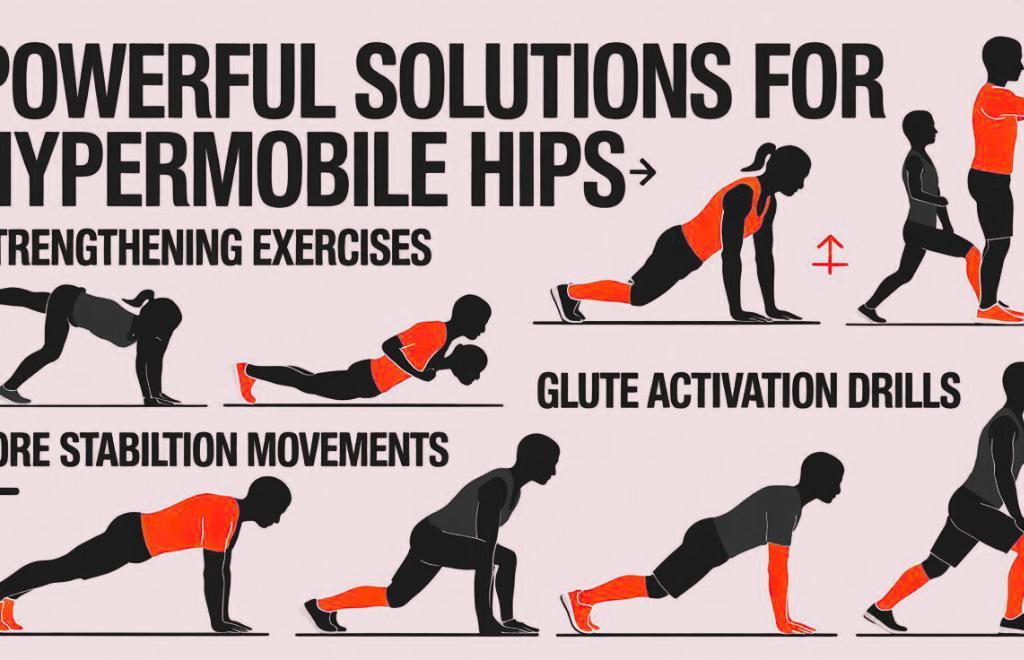
Strengthening Exercises
Strength builds stability—your number one goal.
Core Stability Movements
A strong core prevents your hips from wobbling.
- Dead bugs
- Planks
- Bird-dog
These exercises train your body to hold alignment.
Glute Activation Drills
Weak glutes cause hip instability.
Try:
- Clamshells
- Glute bridges
- Side-lying leg raises
Hip Stabilizing Workouts
Specific strengthening is crucial:
- Lateral band walks
- Single-leg stands
- Step-down exercises
Perform these consistently for best results.
Stretching the Right Way
Avoid Overstretching
You’re already flexible—stretching too much can make things worse.
Avoid:
- Deep hip openers
- Long-held extreme stretches
Safe Mobility Techniques
Instead, try:
- Gentle hip circles
- Controlled dynamic stretches
- Limited-range mobility drills
These improve movement without increasing joint looseness.

Lifestyle Adjustments
Proper Posture Tips
Bad posture makes hypermobility worse. Keep:
- Feet flat
- Back neutral
- Hips aligned
Avoid slouching or crossing your legs for long periods.
Sleep and Rest Strategies
Your sleeping posture matters too.
Try:
- Placing a pillow between your knees
- Sleeping on your side for better hip alignment
Equipment That Helps
Resistance Bands
Great for hip strengthening. They add tension without stressing the joints.
Stability Balls
Useful for balance training and core workouts to enhance hip control.
Professional Treatments for Hypermobile Hips
Physical Therapy
A professional can guide you with customized strengthening routines and movement corrections.
Chiropractic Adjustments
These help realign the hips and relieve pressure, but should be done by a licensed expert.
Massage Therapy
Reduces muscle tension around unstable hips and improves blood flow.
Prevention Tips for Hypermobile Hips
Daily Hip Protection Habits
- Sit with proper alignment
- Avoid deep squats and split stretches
- Keep feet hip-width apart when standing
Injury Prevention Methods
Strengthening is the best defense. Never skip warm-ups and avoid abrupt movements.
Conclusion
Hypermobile hips don’t have to control your life. With the right strategies, exercises, and daily habits, you can stabilize your hips, reduce pain, and move with confidence again. Start applying these Powerful Solutions for Hypermobile Hips You Must Try Now and feel the difference in your everyday movement.
FAQs
1. Can hypermobile hips be cured?
You can’t “cure” hypermobility, but you can manage it effectively through strengthening and lifestyle changes.
2. Is stretching bad for hypermobile hips?
Too much stretching is harmful. Focus on controlled mobility instead.
3. How long does it take to see improvement?
With consistent workouts, many people notice better stability within 4–6 weeks.
4. Can hypermobile hips cause back pain?
Yes, unstable hips often overload the lower back, causing discomfort.
5. What’s the best exercise for hypermobile hips?
Glute bridges, planks, and lateral band walks are some of the top stabilizing moves.











Leave a Comment