

Walking is one of the simplest and most effective ways to stay healthy, fit, and energetic. But in recent years, a specific number has gained popularity worldwide: 10,000 steps per day. Many health enthusiasts, fitness trackers, and medical professionals suggest this daily goal as a benchmark for optimal hea-lth.
But what actually happens to your body when you commit to walking 10,000 steps every day? In this detailed guide, we’ll explore the physical, mental, and long-term health benefits, backed by science and expert insights.
1. Burns Calories and Promotes Weight Loss
One of the most immediate benefits of walking 10,000 steps a day is calorie burning.
- On average, 10,000 steps equal roughly 5 miles (8 kilometers) of walking.
- This burns 300–500 calories, depending on your weight, speed, and terrain.
- Consistent calorie burning helps create a calorie deficit, which is essential for weight loss.
People who track their steps often notice that adding a daily walking routine complements healthy eating and accelerates fat loss, especially around the midsection.
2. Strengthens Your Heart and Cardiovascular System
Walking is a cardio exercise that benefits your heart in multiple ways:
- Improves blood circulation
- Lowers blood pressure
- Reduces bad cholesterol (LDL)
- Increases good cholesterol (HDL)
Studies show that walking 10,000 steps per day can reduce the risk of heart disease, stroke, and high blood pressure, making it one of the simplest yet most effective exercises for heart hea-lth.
3. Enhances Mental Health and Reduces Stress
Walking is not just about physical health — it has a profound effect on your mind.
- Increases serotonin and endorphins, the “feel-good” chemicals in your brain
- Reduces stress and anxiety
- Improves sleep quality
- Boosts focus, memory, and overall cognitive function
Walking outdoors, in particular, exposes you to sunlight, which increases vitamin D levels, further supporting brain health and mood.
4. Improves Joint Health and Mobility
Unlike high-impact exercises like running, walking is low-impact and gentle on the joints.
- Strengthens ligaments and muscles around joints
- Reduces the risk of arthritis-related stiffness
- Improves flexibility and mobility
Older adults who walk 10,000 steps daily report less joint pain and increased ability to perform daily activities independently.
5. Boosts Metabolism and Energy Levels

Walking stimulates your body’s metabolism, helping you:
- Burn more calories even at rest
- Stabilize blood sugar levels
- Reduce fat storage
- Improve overall energy and vitality
A brisk morning walk can kick-start your day, leaving you energized and alert throughout work or daily routines.
6. Supports Digestive HELTTIPS
Walking helps your digestive system by:
- Promoting regular bowel movements
- Reducing constipation
- Improving gut motility
- Supporting nutrient absorption
Regular walking helps your intestinal muscles contract, which aids digestion and reduces bloating — a common problem for many adults.
7. Enhances Muscle Tone and Strength
Although walking is often underestimated as a strength exercise, walking 10,000 steps a day:
- Tones legs, glutes, and calves
- Engages core muscles
- Improves posture and stability
For people who don’t go to the gym, walking is a safe and effective way to maintain lean muscle mass.
8. Improves Blood Sugar Control and Reduces Diabetes Risk
Walking plays a key role in regulating blood sugar levels, especially for people with prediabetes or type 2 diabetes:
- Helps muscles absorb glucose
- Lowers insulin resistance
- Prevents sudden spikes in blood sugar after meals
Walking 10,000 steps a day is associated with a lower risk of developing type 2 diabetes, according to several studies.
9. Strengthens Bones and Reduces Osteoporosis Risk
Weight-bearing exercises like walking strengthen bones. Walking:
- Improves bone density
- Reduces the risk of osteoporosis
- Strengthens hip and leg bones
- Supports healthy aging
Older adults who walk consistently are less likely to suffer fractures or bone-related injuries.
10. Boosts Longevity and Overall Quality of Life
Walking 10,000 steps daily isn’t just about short-term benefits. Studies show that people who maintain a consistent walking routine:
- Live longer, healthier lives
- Have a lower risk of chronic diseases
- Maintain mobility and independence into old age
- Enjoy better mental health and happiness
Simply put, walking regularly can add years to your life and life to your years.
Tips to Reach 10,000 Steps Daily
Walking 10,000 steps may sound intimidating at first, but it’s achievable with the right strategies:
- Start gradually – Begin with 5,000 steps and increase over time.
- Use a step tracker or phone app – It keeps you motivated and accountable.
- Take short walking breaks – Walk for 5–10 minutes every hour.
- Walk after meals – Helps digestion and burns extra calories.
- Choose stairs over elevators – Every step counts!
- Walk with friends or family – Makes it fun and sustainable.
- Add brisk intervals – Speed up your pace for 2–3 minutes every 10 minutes to burn more calories.

Frequently Asked Questions
1. Can walking 10,000 steps replace gym workouts?
Yes, for many people, walking 10,000 steps a day is enough to maintain general fitness and health, especially if complemented with a balanced diet.
2. How long does it take to walk 10,000 steps?
It takes approximately 90–120 minutes for an average adult walking at a moderate pace. You can break it into smaller sessions throughout the day.
3. Is walking better than running for health?
Walking is gentler on joints, reduces stress, and is easier to maintain consistently, making it ideal for long-term health.
4. Can walking reduce belly fat specifically?
Yes, regular walking burns calories and reduces visceral fat, which accumulates around the belly.
5. What if I can’t walk 10,000 steps?
Start with smaller goals, like 5,000 steps, and gradually increase. Consistency matters more than hitting the exact number immediately.
Final Thoughts
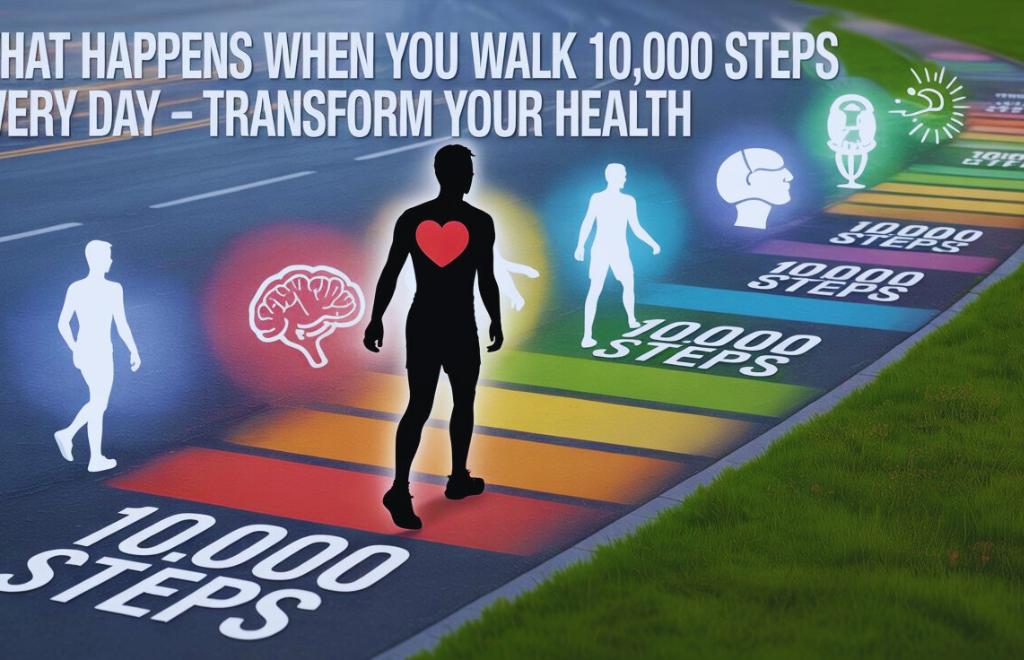
Walking 10,000 steps every day is more than just a fitness trend — it’s a life-changing habit. From weight loss, improved heart health, and stronger muscles to better mental health, digestion, and longevity, the benefits are countless.
Even small changes, like taking the stairs, walking during breaks, or a short evening stroll, can make a huge difference. With consistency and dedication, walking 10,000 steps a day can transform your body, mind, and life.
Start today, and experience the incredible health benefits of one of the simplest exercises on the planet: walking.










Leave a Comment