
Introduction
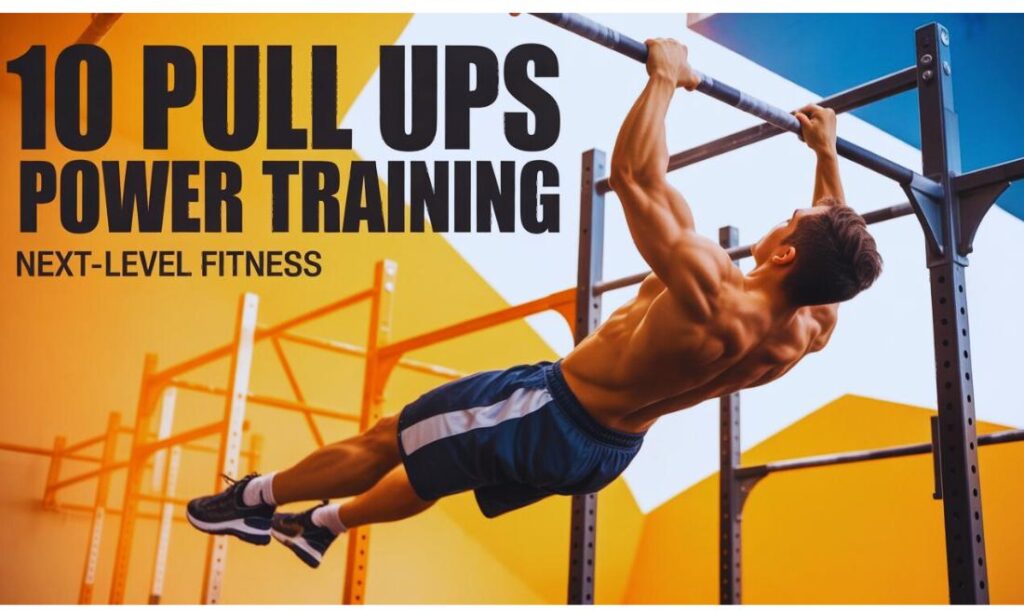
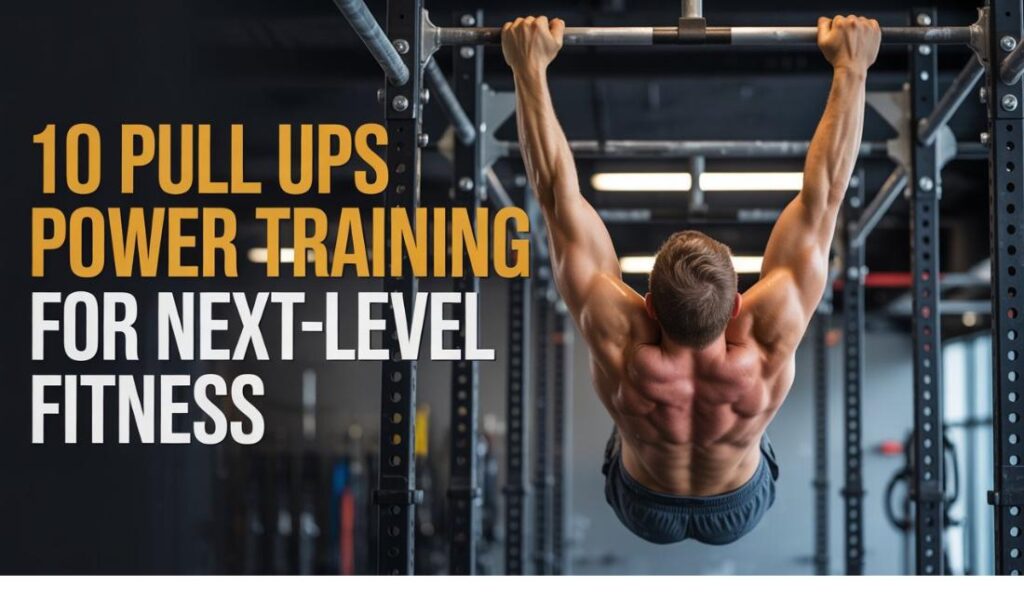
Pull-ups are one of the most powerful bodyweight exercises for building upper body strength, improving endurance, and developing overall athletic performance. When performed correctly, pull ups power training can transform your fitness level by targeting multiple muscle groups at once. From beginners trying their first repetition to advanced athletes aiming for high-volume sets, pull-ups remain a gold-standard exercise in strength training.
The beauty of pull ups power training lies in its simplicity. All you need is a sturdy bar and your body weight. Yet the benefits are enormous—stronger back muscles, improved grip strength, enhanced posture, and greater functional fitness. Pull-ups challenge your muscles in ways that machines cannot replicate, making them an essential movement for anyone seeking next-level fitness.
In this guide, you will learn 10 powerful pull ups power training strategies that help build strength, increase repetitions, and unlock new performance levels. Whether you want to master your first pull-up or push past a plateau, these methods will help you train smarter and achieve impressive results.
Master the Basic Pull-Up Technique
Before jumping into intense training routines, mastering proper technique is essential. Good form ensures maximum muscle activation and reduces the risk of injury.
Start by gripping the pull-up bar with your palms facing away from you. Your hands should be slightly wider than shoulder width.
Then follow these steps:
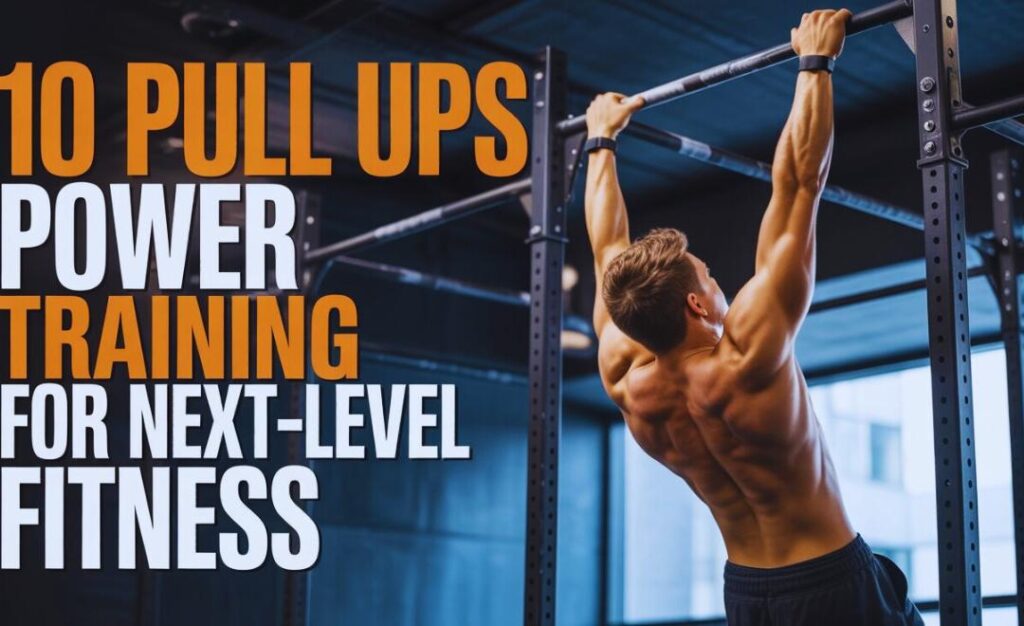
- Engage your core
- Pull your chest toward the bar
- Keep your shoulders down and back
- Avoid swinging your legs
Your chin should rise above the bar at the top of the movement. Slowly lower yourself back to the starting position to complete the repetition.
In pull ups power training, technique always comes before volume. One perfect pull-up is far more effective than several poorly executed ones.
Strengthen Your Grip for Better Pull Ups
Grip strength plays a critical role in pull ups power training. Without a strong grip, your hands may fatigue before your back muscles even get fully activated.
You can improve grip strength through exercises such as:
- Dead hangs from a pull-up bar
- Farmer’s carries with dumbbells
- Towel pull-ups
- Plate holds
Dead hangs are especially effective. Simply hang from the bar for 20–40 seconds. Over time, increase the duration to build endurance in your forearms and hands.
A stronger grip leads to longer sets and more effective pull ups power training sessions.
Train Your Back Muscles Strategically
Pull-ups primarily target the back muscles, particularly the latissimus dorsi (lats). These muscles are responsible for the powerful pulling motion.
To enhance pull ups power training, you should also strengthen supporting muscles such as:
- Rhomboids
- Trapezius
- Rear deltoids
- Biceps
Helpful exercises include:
- Lat pulldowns
- Inverted rows
- Resistance band rows
- Dumbbell rows
Building these muscles makes pull-ups easier and improves overall pulling strength.
Use Assisted Pull Ups for Beginners
If you cannot perform a full pull-up yet, assisted variations are extremely helpful.
Assisted pull ups allow you to practice the movement while gradually building strength.
Common methods include:
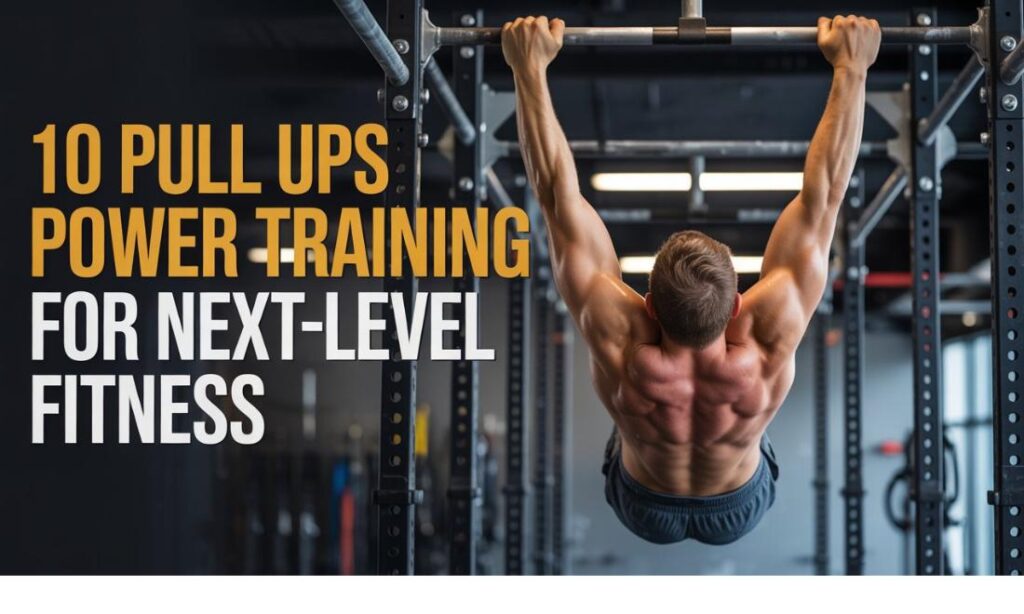
- Resistance band pull-ups
- Assisted pull-up machines
- Partner-assisted pull-ups
Resistance bands are one of the best tools for beginners. They provide support at the bottom of the movement, where most people struggle.
As your strength improves, gradually reduce the assistance.
This progressive method is a key principle of pull ups power training.
Incorporate Negative Pull Ups
Negative pull-ups are one of the fastest ways to develop pull-up strength.
In this exercise, you focus on the lowering phase of the movement.
Steps:
- Jump or step up so your chin is above the bar
- Slowly lower yourself down for 3–5 seconds
- Repeat the movement
This technique trains your muscles eccentrically, which builds strength more quickly than standard repetitions.
Many athletes use negatives as a foundational element of pull ups power training.
Increase Volume Gradually
Progression is essential in strength training. To improve pull-up performance, you must gradually increase the number of repetitions and sets.
Start with a manageable routine such as:
- 3 sets of 3–5 pull-ups
As your strength grows, increase to:
- 4 sets of 6–8 pull-ups
Advanced athletes may perform:
- 5 sets of 10+ pull-ups
Consistency and gradual progression are the backbone of effective pull ups power training.
Add Weighted Pull Ups for Strength
Once you can perform multiple pull-ups comfortably, weighted pull-ups can push your strength to the next level.
Weighted pull ups involve adding resistance through:
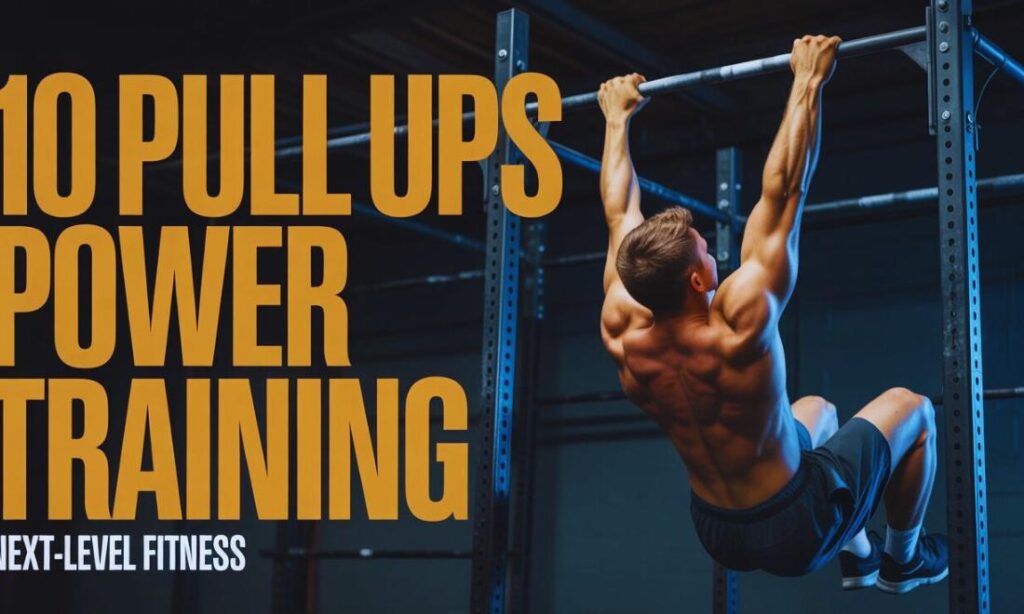
- Weight belts
- Weighted vests
- Dumbbells held between the feet
Adding extra resistance increases muscle activation and helps develop explosive pulling strength.
Even adding just 5–10 pounds can significantly challenge your muscles.
Weighted training is a powerful method used by advanced athletes in pull ups power training programs.
Improve Core Strength
Many people overlook the role of the core in pull-ups. However, a strong core stabilizes the body and prevents unnecessary swinging.
Core exercises that support pull ups power training include:
- Planks
- Hanging leg raises
- Russian twists
- Ab wheel rollouts
A stable core helps maintain strict form and improves overall performance during pull-up workouts.
Follow a Consistent Training Schedule
Training frequency plays an important role in pull-up progression.
For most people, 2–3 pull-up workouts per week works well.
Example schedule:
Day 1 – Strength focus (weighted pull-ups)
Day 2 – Technique practice
Day 3 – Endurance sets
Rest days are equally important. Muscles grow stronger during recovery, not during the workout itself.
A consistent schedule allows your body to adapt and improve steadily.
Track Progress and Stay Motivated
Tracking your training helps maintain motivation and ensures steady improvement.
Keep a simple workout log including:
- Number of sets
- Number of repetitions
- Assistance level
- Added weight
Over time, you will clearly see improvements in your strength.
Pull ups power training is a journey. Celebrating small milestones—like your first full pull-up or reaching 10 repetitions—keeps you motivated and committed.
Benefits of Pull Ups Power Training
Pull-ups offer a wide range of physical benefits.
Upper Body Strength
Pull-ups build powerful back, shoulder, and arm muscles.
Improved Posture
Strong back muscles help maintain better spinal alignment.
Functional Fitness
Pull-ups train movement patterns used in real-life activities.
Calorie Burning
High-intensity pull-up workouts burn calories and improve metabolism.
Athletic Performance
Pull-ups enhance climbing ability, endurance, and overall strength.
These benefits make pull ups power training a valuable addition to any fitness routine.
Consultation: Who Should Be Careful with Pull Ups
Although pull-ups are highly beneficial, some individuals should consult a fitness professional before starting intense training.
This includes:
- Beginners with no upper body strength
- Individuals with shoulder injuries
- People recovering from elbow or wrist problems
A qualified trainer can help adjust techniques and create a safe training plan.
Proper warm-ups and gradual progression are essential for preventing injuries.
Conclusion
Pull-ups remain one of the most effective exercises for building upper body power and achieving next-level fitness. Through pull ups power training, you can strengthen your back, improve endurance, and develop impressive functional strength.
By mastering proper technique, strengthening supporting muscles, incorporating assisted and negative variations, and progressively increasing intensity, anyone can dramatically improve their pull-up performance.
Remember, consistency is the key to success. With patience and dedication, pull ups power training can transform your fitness level and help you achieve strength you never thought possible.
FAQs
How many pull-ups should beginners aim for?
Beginners should start with assisted pull-ups or negatives and aim for 3–5 repetitions per set.
How long does it take to learn a pull-up?
With consistent pull ups power training, most beginners can achieve their first pull-up within 4–8 weeks.
Are pull-ups better than lat pulldowns?
Pull-ups engage more muscles and require full body control, making them more effective for overall strength.
Can pull-ups help with weight loss?
Yes. Pull-ups burn calories and build muscle, which can improve metabolism and support fat loss
How often should I train pull-ups?
Training pull-ups 2–3 times per week allows adequate recovery while improving strength and endurance
.









Leave a Comment