
Introduction
If you’ve ever struggled to hold a heavy barbell, carry grocery bags, or maintain control during pull-ups, you’ve already experienced the importance of crush grip strength. The ability to firmly squeeze objects is not just about having a strong handshake—it’s a crucial component of athletic performance, daily function, and even long-term health. Studies show that improving grip strength can significantly enhance overall physical performance and may even indicate better neuromuscular efficiency and injury resistance.
The crush grip refers to the force produced when you squeeze your fingers toward your palm, similar to closing a hand gripper. It relies heavily on the finger flexor muscles and forearm tendons, which play a vital role in strength sports like powerlifting, climbing, arm wrestling, and martial arts. Research has demonstrated that structured hand-strength training can lead to measurable improvements in grip force and manual dexterity.
This guide explores Elite 7 Crush Grip Training techniques designed to maximize hand strength, build forearm power, and improve overall grip endurance. By the end of this article, you will understand how crush grip training works, why it matters, and how to apply seven powerful exercises to dramatically increase your grip po
Understanding Crush Grip Strength
What Is Crush Grip Strength
Crush grip strength refers to the ability to forcefully close your hand and squeeze an object. Imagine crushing a soda can or firmly gripping a hand gripper—that squeezing force is your crush grip in action. Unlike other grip types such as pinch grip or support grip, the crush grip relies on the coordinated action of the fingers, palm, and forearm muscles to generate powerful pressure.
This type of grip is commonly measured using a hand dynamometer, a device that determines how much force your hand can generate. According to grip strength benchmarks, healthy adult men typically produce between 44–52 kg of grip force, while women average around 27–31 kg in younger age groups.
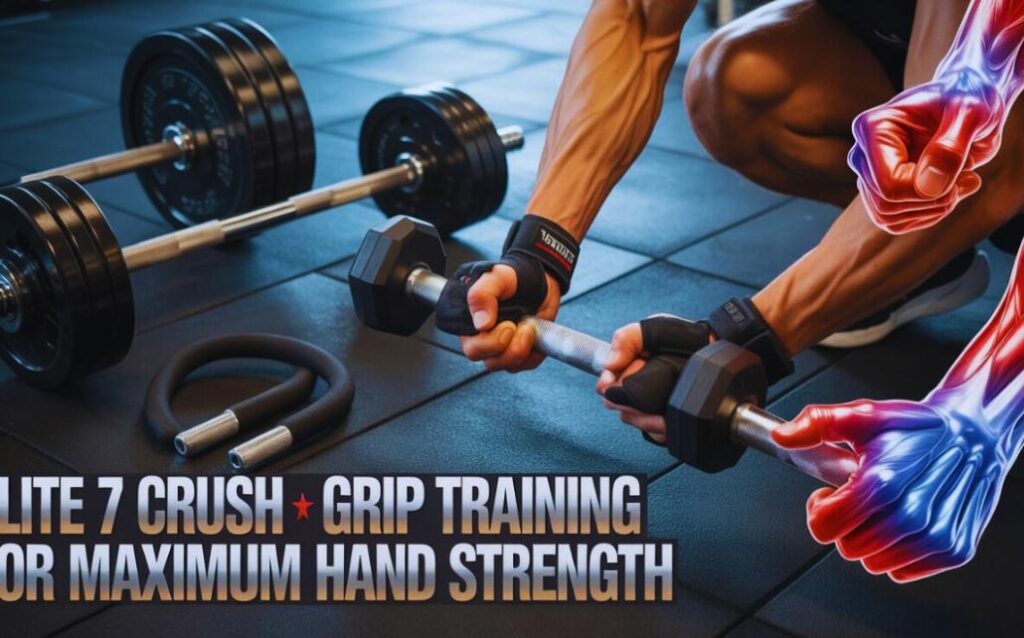
What makes crush grip unique is that it’s closely tied to neuromuscular coordination. Your brain must recruit multiple muscle fibers simultaneously to generate maximum squeezing force. This is why athletes who train their grip consistently often develop stronger forearms and better control over heavy objects.
Think of your grip as the “final link” in the strength chain. You might have powerful back or arm muscles, but if your hands fail, the entire movement collapses. That’s why elite athletes—from climbers to powerlifters—place a huge emphasis on building serious grip strength.
Why Strong Hands Matter in Fitness
Strong hands are often underestimated in fitness training, yet they play a major role in nearly every upper-body exercise. Pull-ups, deadlifts, kettlebell swings, and rows all require strong grip endurance. When your hands become the weak link, your entire workout performance suffers.
Improving crush grip strength can significantly boost lifting performance. For example, athletes with stronger grips often maintain better control during heavy pulling movements, preventing early fatigue and improving technique.
Another advantage of strong hands is injury prevention. When your grip is weak, the body compensates by placing extra stress on the shoulders, elbows, and wrists. This compensation can eventually lead to overuse injuries. Strengthening the hand muscles distributes the load more evenly across the arm.
Grip training also enhances everyday functional tasks. Opening jars, carrying bags, and performing manual work become easier when your hands are stronger. In other words, building grip strength isn’t just about looking strong—it’s about performing better in both the gym and real life.
The Science Behind Grip Strength
Muscle Groups Involved in Crush Grip
Crush grip strength relies on several muscles working together in harmony. The primary muscles responsible for this action are located in the forearm and hand.
The most important muscles include:
- Flexor digitorum profundus
- Flexor digitorum superficialis
- Flexor pollicis longus
- Intrinsic hand muscles
These muscles act like powerful cables pulling your fingers into a tight fist. When you train crush grip exercises, these muscles adapt by becoming stronger and more efficient at generating force.
Another critical factor is tendon strength. The tendons connecting the forearm muscles to the fingers must withstand significant tension during crushing movements. Regular training increases tendon resilience, allowing you to apply more force safely.
This combination of muscular and tendon development explains why dedicated grip training leads to dramatic improvements in hand strength over time.
Research on Grip Strength Benefits
Scientific research consistently supports the importance of grip training. A meta-analysis examining hand-strength programs found that targeted training produced small-to-moderate improvements in grip strength and significant improvements in manual dexterity.
Another study revealed that structured hand-gripper exercises increased grip strength by approximately 26% in trained participants after consistent training interventions.
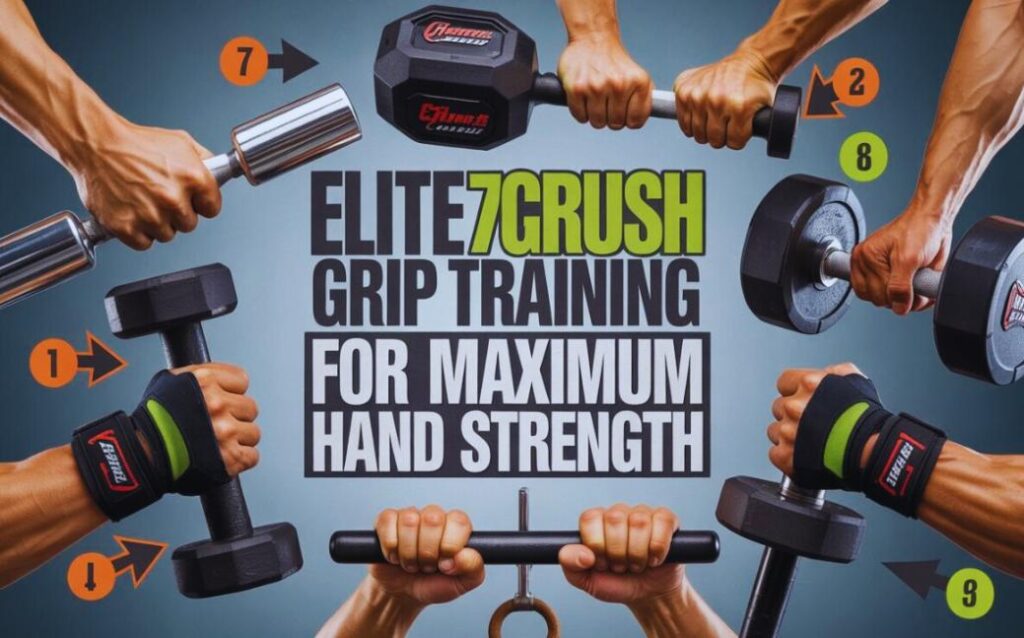
These improvements are not limited to athletes. Grip strength is also widely used as a general health indicator. Medical professionals often measure grip force to evaluate muscle health, aging, and overall physical function.
Simply put, improving your grip doesn’t just make your hands stronger—it improves your entire body’s performance and resilience.
Benefits of Crush Grip Training
Athletic Performance Improvements
Athletes across many disciplines rely on exceptional grip strength. Rock climbers depend on it to hold tiny edges, martial artists use it to control opponents, and powerlifters need it to maintain heavy deadlifts.
Stronger grip muscles allow athletes to generate better force transfer throughout the arms and shoulders. When the hands remain stable and powerful, the entire upper body works more efficiently.
Grip training also enhances endurance under fatigue. During long workouts or competitions, forearm muscles often tire first. Strengthening these muscles helps delay fatigue and maintain performance for longer periods.
Everyday Functional Strength
Outside the gym, grip strength plays a huge role in daily activities. Tasks such as carrying shopping bags, lifting children, or moving furniture all require strong hands.
Weak grip strength can make these tasks difficult and sometimes unsafe. Strengthening your grip ensures better control and reduces the risk of dropping heavy objects.
Grip strength is also linked to long-term health outcomes. Research suggests that individuals with stronger grip strength often display better overall muscle function and physical resilience.
In many ways, your grip is a mirror of your overall strength and vitality.
Elite 7 Crush Grip Training Exercises
Hand Gripper Squeezes
Hand grippers are one of the most effective tools for developing maximum crush grip power. These small spring-loaded devices allow you to progressively increase resistance as your strength improves.
To perform this exercise, hold the gripper in one hand and squeeze it until the handles touch. Slowly release the tension and repeat for multiple repetitions.
Grippers are excellent because they target the exact motion used in crush grip strength. Studies show that consistent hand-gripper training can significantly increase maximum voluntary contraction in the hands.
Start with moderate resistance and gradually increase intensity as your grip becomes stronger.
Plate Pinch Crush Hold
The plate pinch hold combines crush and pinch strength. Hold two weight plates together with the smooth sides facing outward and squeeze them firmly between your fingers.
Keep your grip tight while holding the plates for as long as possible. This exercise builds tremendous finger and thumb strength while improving grip endurance.
Towel Grip Pull-Ups
Wrapping a towel around a pull-up bar instantly increases grip difficulty. Instead of holding the bar directly, you grip the towel ends and perform pull-ups.
This variation forces your hands to work harder, strengthening both your forearms and crush grip simultaneously.
Farmer’s Carry
The farmer’s carry is a simple yet brutal exercise. Hold heavy dumbbells or kettlebells in each hand and walk forward for distance or time.
This movement strengthens grip endurance while also building core stability and total-body strength.
Dead Hangs
Dead hangs involve hanging from a pull-up bar with straight arms for as long as possible. While it looks simple, the exercise heavily challenges your grip muscles.
Over time, longer hangs dramatically improve grip endurance.
Rice Bucket Training
Rice bucket training is a classic grip exercise used by martial artists. Fill a bucket with rice and perform various hand movements inside it.
These movements strengthen the fingers, wrists, and forearms in multiple directions.
Thick Bar Training
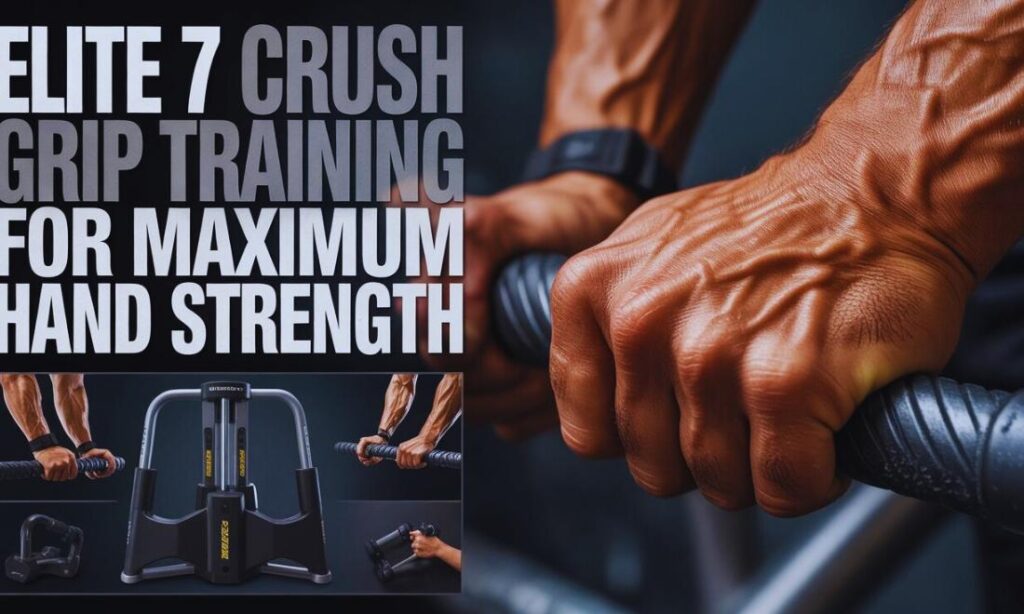
Using thick bars or fat grips forces your hands to squeeze harder than usual. The larger diameter reduces leverage and increases grip demand.
Many strength athletes use thick bars to build crushing hand strength quickly.
Sample Crush Grip Workout Routine
Beginner Program
A beginner crush grip routine should focus on building foundational strength.
Example routine:
- Hand gripper squeezes – 3 sets of 10 reps
- Dead hangs – 3 sets of 20 seconds
- Farmer’s carries – 3 sets of 30 seconds
Perform this routine 2–3 times per week to allow recovery between sessions.
Advanced Strength Routine
Advanced trainees should incorporate heavier resistance and longer holds.
Example routine:
- Heavy gripper closes – 5 sets of 5 reps
- Plate pinch holds – 4 sets of 30 seconds
- Towel pull-ups – 4 sets of 6 reps
Progressively increase resistance each week for continuous improvement.
Common Mistakes in Grip Training
Many people make simple mistakes that limit their progress. One common error is training grip too frequently without recovery. The forearm muscles are small and can easily become overworked.
Another mistake is ignoring progressive overload. Just like any other muscle group, your grip must gradually face greater resistance to grow stronger.
Finally, some people rely only on hand grippers. While effective, combining multiple grip exercises produces better overall strength.
Consultation and Safety Advice
Before starting an intense grip training program, consider consulting a fitness professional or physical therapist, especially if you have previous wrist or hand injuries.
Proper warm-up exercises such as wrist circles and light squeezing drills can prepare the muscles and reduce injury risk. Gradually increasing resistance is also essential to avoid tendon strain.
Athletes experiencing persistent pain in the wrists or fingers should stop training and seek professional medical advice. Smart training ensures long-term strength without unnecessary injuries.
Conclusion
Building powerful hands requires dedication, smart programming, and consistent effort. The Elite 7 Crush Grip Training methods outlined in this guide provide a complete approach to maximizing hand strength and forearm development.
By combining exercises like hand grippers, farmer’s carries, plate pinches, and dead hangs, you create a balanced program that strengthens every aspect of the grip. Over time, stronger hands will improve athletic performance, increase lifting capacity, and make everyday tasks easier.
Your hands are the gateway to strength. When they become stronger, the rest of your body follows.
FAQs
How often should I train crush grip strength?
Most people benefit from training grip 2–3 times per week with at least one rest day between sessions.
How long does it take to improve grip strength?
Noticeable improvements usually appear within 4–8 weeks of consistent training.
Are hand grippers enough for grip training?
Hand grippers are effective, but combining them with exercises like farmer’s carries and dead hangs produces better results.
Can grip strength improve overall lifting performance?
Yes. Stronger grip allows you to hold heavier weights longer, improving exercises like deadlifts and rows.
Is grip strength important for daily life?
Absolutely. Strong hands make everyday activities easier and may reflect better overall physical health










Leave a Comment