
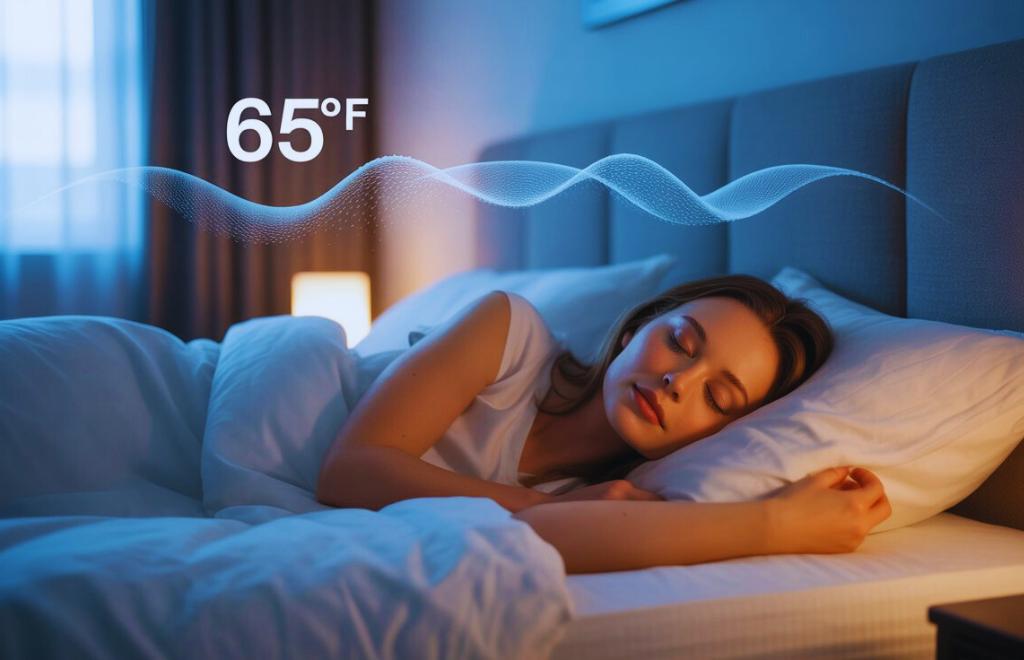
Introduction: Sleep is often viewed as a passive state of rest, but beneath the surface, your brain is performing a high-stakes biological dance. Central to this performance is the regulation of heat. If you have ever tossed and turned in a stuffy room, you know instinctively that temperature matters. However, science reveals that the ideal bedroom temperature is not just about comfort—it is the biological trigger required to Unlock Deep REM sleep.
In this comprehensive guide, we will explore why cooling your environment is the fastest way to upgrade your brain health, the specific mechanics of thermal regulation, and how you can manipulate your surroundings to achieve peak restorative rest.
The Biological Connection: Temperature and the Circadian Rhythm
To understand why the ideal bedroom temperature is so low, we must look at the hypothalamus—the brain’s command center. This tiny region manages both your sleep-wake cycle and your internal thermostat.+1
As evening approaches, your body begins a process called vasodilation. Your blood vessels expand, particularly in your hands and feet, to radiate heat away from your core. This internal cooling is the primary signal to your brain that it is time to transition from alertness to sleep. If your bedroom is too warm, this heat exchange is stifled. Your core temperature stays elevated, your heart rate remains high, and your brain stays in a state of “thermal vigilance,” effectively locking you out of the deeper stages of sleep.
Why REM Sleep Requires a Cool Climate
Rapid Eye Movement (REM) is the final frontier of the sleep cycle. It is the stage where we dream, process emotional trauma, and solidify new memories. It is also the stage where we are most vulnerable to temperature fluctuations.+1
During REM sleep, your body enters a state of temporary paralysis. Interestingly, you also lose much of your ability to thermoregulate. You effectively become cold-blooded (poikilothermic), meaning your body temperature begins to track the temperature of the room.+1
- The Heat Trap: If the room is above the ideal bedroom temperature, your brain will prematurely exit REM sleep to trigger a “wake-up” response, forcing you to move, kick off the covers, or sweat to cool down.
- The Cold Advantage: When you maintain the ideal bedroom temperature, your body can remain in REM longer because it doesn’t have to fight an uphill battle against ambient heat. This allows for the “Fast” results in cognitive clarity and mood stability the next morning.
Defining the “Goldilocks Zone” for Sleep
Experts from the Mayo Clinic and the National Sleep Foundation have converged on a specific range. To Unlock Deep REM, your thermostat should ideally be set between 60 and 67 degrees Fahrenheit (15.6 to 19.4 degrees Celsius).
The Breakdown of the Ideal Range:
| Temperature Range | Effect on Sleep |
| Above 72°F (22°C) | Likely to cause restlessness, night sweats, and fragmented REM. |
| 65°F – 68°F (18°C – 20°C) | The “Sweet Spot” for most healthy adults to trigger melatonin. |
| Below 60°F (15°C) | May cause muscle tension as the body tries to generate heat through shivering. |
While 65 degrees might sound “freezing” to some, it is the biological baseline that mimics the natural cooling of the earth after sunset—an environmental cue our ancestors relied on for millennia.
How to Unlock Deep REM: A Step-by-Step Environmental Audit
If you want to see results Fast, you cannot rely on the thermostat alone. You must address the “micro-climate” inside your bed.
Optimize Your Bedding Materials
Many modern mattresses are made of memory foam, which is notorious for trapping body heat. To maintain the ideal bedroom temperature, consider:
- Natural Fibers: Switch to linen, bamboo, or eucalyptus (Tencel) sheets. These are more breathable than high-thread-count cotton or synthetic polyesters.
- The Layering Rule: Use multiple thin blankets rather than one heavy duvet. This allows you to fine-tune your warmth without trapping excessive heat.
The Power of “Passive Cooling”
You can influence your internal temperature through your evening routine. A warm bath or shower 60 to 90 minutes before bed is a science-backed hack. The warm water draws blood to the surface of your skin; when you step out, that heat evaporates rapidly, causing your core temperature to plummet—perfectly timing your “thermal low” with your head hitting the pillow.

3. Airflow and Humidity
Stagnant air feels warmer than moving air. A ceiling fan or a bedside oscillating fan helps move heat away from your body. Furthermore, keep humidity levels between 30% and 50%. If the air is too humid, your sweat cannot evaporate, which is the body’s primary cooling mechanism, making the ideal bedroom temperature impossible to perceive.
The Hidden Consequences of a Warm Bedroom
Failing to Unlock Deep REM through temperature control has long-term health implications. Chronic “thermal stress” during the night can lead to:
- Increased Cortisol: When the body is too hot, it views it as a stressor, spiking your “stress hormone” and making you feel “wired but tired.”
- Metabolic Disruption: Studies suggest that sleeping in a cooler room (around 66°F) can increase the production of “brown fat”—a type of healthy fat that burns calories to generate heat, potentially aiding in weight management.
- Cognitive Decline: Without sufficient REM, the glymphatic system (the brain’s waste clearance system) cannot effectively wash away beta-amyloid plaques associated with neurodegenerative diseases.
Consultation: Personalizing Your Sleep Temperature
While the 60-67 degree range is the gold standard, individual factors play a role. If you are going to Unlock Deep REM, you must account for:
- Age: Older adults may find they need a slightly warmer room (around 68-70°F) due to thinning skin and changes in circulation.
- Partner Preferences: If you and your partner have different “thermal set points,” consider a dual-zone cooling pad or “Scandinavian Sleep” (using two separate twin duvets on one bed).
- Health Conditions: Individuals with hyperthyroidism often require much cooler rooms, while those with Raynaud’s disease may need to keep their extremities warm to facilitate core cooling.

If you consistently struggle with temperature regulation despite following these guidelines, a consultation with a sleep specialist or an endocrinologist is recommended to ensure your hormones are in balance.
- Conclusion:
- To Unlock Deep REM: Ideal Bedroom Temperature That Works Fast, you must view your bedroom as a performance lab. By lowering the thermostat, choosing breathable fabrics, and utilizing the science of thermoregulation, you aren’t just “going to bed”—you are optimizing your brain for the day ahead.
FAQs: Mastering the Ideal Bedroom Temperature
Is it better to be slightly too cold or slightly too warm?
It is almost always better to be slightly too cold. You can add a light blanket to find comfort, but if your core temperature is too high, your brain will physically struggle to initiate the chemical reactions needed for deep sleep.
Does sleeping naked help Unlock Deep REM?
Yes, for many people. Sleeping without restrictive clothing allows for better airflow and more efficient heat dissipation across the skin’s surface, helping you maintain the ideal bedroom temperature naturally.
Why do I wake up at 3:00 AM feeling hot?
This is often due to the “Rebound Effect.” Your body’s core temperature is at its lowest point in the early morning. If your room or bedding has trapped heat throughout the night, the contrast becomes more apparent, causing you to wake up as your body tries to shed that trapped energy.
Can a smart thermostat help with sleep cycles?
Absolutely. You can program a smart thermostat to start at 68°F for sleep onset and drop to 65°F during the middle of the night when REM cycles are most frequent, then slowly rise to 70°F to help you wake up naturally.
How does the ideal bedroom temperature affect snoring?
While temperature doesn’t directly cause snoring, a room that is too warm can dry out nasal passages or lead to congestion, which narrows the airways. A cool, propely humidified room supports clear breathin










Leave a Comment