
This guide serves as a definitive resource, blending the latest geroscience breakthroughs with practical, actionable strategies to help you or your loved ones stay strong, steady, and vibrant.
What is Sarcopenia? Understanding the “Silent” Decline
Sarcopenia is defined as the age-related loss of skeletal muscle mass and strength. It typically begins as early as age 40, but the decline accelerates significantly after 65. By the time many seniors notice they have trouble opening a jar or rising from a low chair, they may have already lost 30% to 50% of their peak muscle mass.
In 2026, preventing sarcopenia in seniors has become a top public health priority because muscle is more than just “meat”—it is an endocrine organ that regulates blood sugar, supports the immune system, and protects bones from fractures.
The Proven Science of Muscle Maintenance in 2026
Research published early this year confirms that the “anabolic resistance” often seen in older adults—where the body becomes less efficient at building muscle—can be overridden.
- mTOR Signaling: Just as with longevity drugs, the mTOR pathway plays a role here. However, for muscle growth, we want to activate mTOR through specific nutrients and mechanical tension.
- The Myokine Effect: When we exercise, muscles release “myokines”—hormone-like signaling molecules that reduce systemic inflammation and improve brain health.
The Nutritional Pillar: Eating for Muscle Power
When it comes to preventing sarcopenia in seniors, your plate is your first line of defense. The old “Recommended Daily Allowance” (RDA) is increasingly seen as insufficient for the elderly.
High-Quality Protein Targets
To maintain muscle, seniors require more protein per pound of body weight than younger adults.
- The 2026 Standard: Aim for 1.2 to 1.5 grams of protein per kilogram of body weight.
- Distribution Matters: Don’t eat all your protein at dinner. To trigger muscle protein synthesis (MPS), you need a “leucine trigger”—roughly 25–30 grams of protein per meal, three times a day.
Vital Nutrients for 2026
- Leucine: This amino acid is the “on switch” for muscle building. Found in whey protein, eggs, and lean meats.
- Vitamin D3: Essential for muscle fiber contraction and preventing falls.
- Omega-3 Fatty Acids: New studies show that high-dose fish oil (2-3g/day) can help overcome anabolic resistance by reducing muscle inflammation.
Resistance Training: The Only “Cure” for Muscle Loss
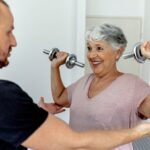
You cannot eat your way out of muscle loss alone; you must provide a mechanical stimulus. Preventing sarcopenia in seniors requires progressive resistance training (PRT).
The 2026 Resistance Protocol:
- Frequency: 2 to 3 sessions per week, allowing 48 hours of rest between sessions for recovery.
- Intensity: You don’t need to lift “heavy” in the traditional sense, but you must reach “near-failure.” If you can easily do 20 reps, the weight is too light. Aim for 8–12 repetitions.
- Modality: Resistance bands are the breakout trend of 2026. They provide constant tension and are gentler on aging joints than heavy iron plates.
Modern Lifestyle Interventions
Beyond the gym and the kitchen, several lifestyle factors influence preventing sarcopenia in seniors:
- Sleep Quality: Muscle repair happens during deep sleep. Growth hormone peaks while you rest. Aim for 7-8 hours.
- Hydration: Dehydrated muscles are weaker and more prone to injury.
- Anti-Inflammatory Living: Chronic “inflammaging” (low-grade, age-related inflammation) acts like acid on muscle tissue. Reducing ultra-processed sugars is a vital step.
Sarcopenic Obesity: The Double-Edged Sword
A dangerous trend in 2026 is sarcopenic obesity—where a senior has high body fat but dangerously low muscle mass. This “skinny-fat” condition is often missed because the scale weight looks “normal.” Preventing sarcopenia in seniors who are overweight requires a delicate balance: losing fat through a caloric deficit while increasing protein and resistance training to protect every ounce of existing muscle.
Monitoring Progress: How to Know if You’re Winning
In the past, we just used a scale. In 2026, seniors have better tools:
- Grip Strength: A handgrip dynamometer is a “vital” predictor of overall longevity.
- Gait Speed: How fast you walk is a direct reflection of leg power.
- The Chair Stand Test: How many times can you stand up from a chair in 30 seconds without using your hands? (Target for age 70+: 12–15 times).
Summary Checklist for Senior Vitality
| Strategy | Action Step |
| Protein | 30g per meal (Whey, Greek yogurt, Lean meat) |
| Exercise | 2-3 days of resistance bands or weights |
| Supplements | Vitamin D3 (2000+ IU) and Creatine Monohydrate (3-5g) |
| Recovery | 8 hours of sleep and adequate hydration |
Conclusion: A Call to Action
The science is clear: frailty is not a prerequisite for aging. By focusing on preventing sarcopenia in seniors through a combination of high-leucine protein, consistent resistance training, and strategic supplementation, we can preserve the strength required for an independent life.
Expert Consultation: Before starting a high-intensity resistance program or a high-protein diet, especially if you have underlying kidney or heart conditions, please consult with a geriatrician or a certified exercise physiologist. They can tailor these 2026 insights to your specific biological needs.
Frequently Asked Questions (FAQs)
Is it too late to start building muscle at 75?
Absolutely not. Research shows that even individuals in their 90s can increase muscle size and strength with proper resistance training.
Can walking alone prevent sarcopenia?
While walking is great for cardiovascular health, it is rarely enough to build or maintain significant muscle mass. You need the “pull” of resistance (weights or bands) to stimulate growth.
Is whey protein safe for seniors?
For most, yes. Whey is one of the fastest-absorbing proteins and is very high in leucine, making it ideal for preventing sarcopenia in seniors. Consult your doctor if you have kidney issues.
How does Creatine help seniors?
. It helps provide energy for muscle contractions and has been shown to improve both muscle mass and cognitive function in older adults.
What are the first signs of muscle loss?
Feeling “unsteady” on your feet, needing to use your arms to get out of a chair, and a noticeable decrease in walking speed are all early warning signs







Leave a Comment