
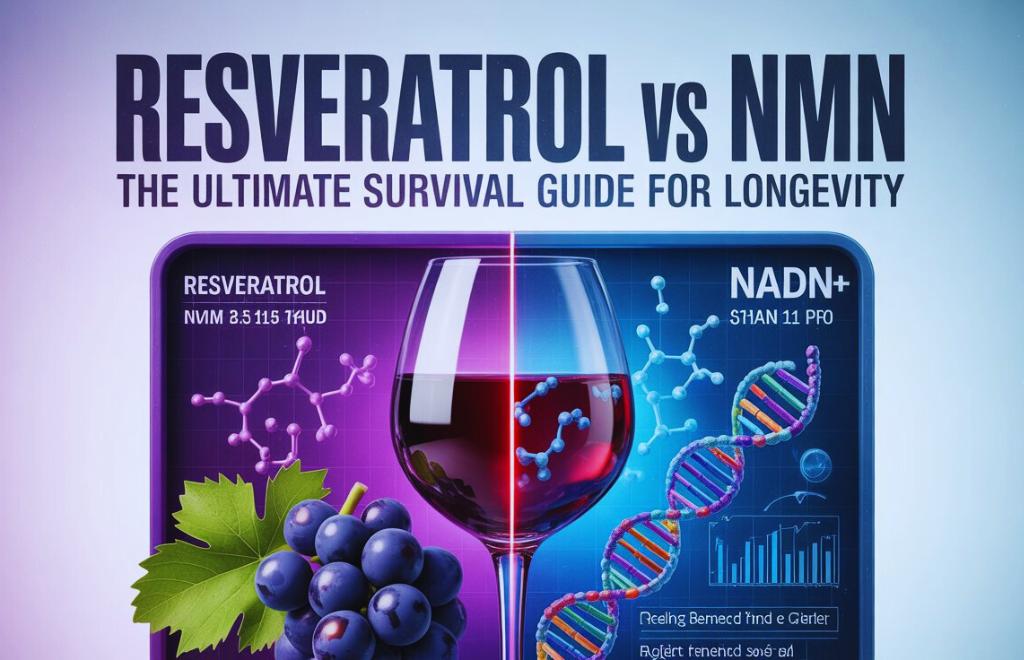
The quest for eternal youth has moved from the realm of mythology into the rigorous laboratories of modern science. In the biological arms race against time, two heavyweights have emerged as the most promising compounds for extending “healthspan”—the period of life spent in good health. These are Resveratrol and NMN (Nicotinamide Mononucleotide).
If you have followed the work of Harvard geneticist Dr. David Sinclair or delved into the world of biohacking, you’ve likely heard these names mentioned in the same breath.
as we move through 2026, the data has become more refined. Are they competitors, or are they partners? Should you choose one over the other, or is the secret to longevity found in the synergy between them?
This comprehensive guide serves as your roadmap to understanding Resveratrol vs NMN, exploring their mechanisms, the latest 2026 research, and how to optimize your regimen for maximum cellular survival.
The Biological Context: Why We Age
Before comparing the supplements, we must understand the enemy: cellular senescence and metabolic decay. Aging is largely driven by the decline of two critical components in our cells:
- NAD+ (Nicotinamide Adenine Dinucleotide): A coenzyme found in all living cells that is essential for energy metabolism and DNA repair.
- Sirtuins: A family of “longevity genes” (SIRT1-SIRT7) that act as cellular guardians, repairing damaged DNA and protecting us from age-related diseases.
As we age, our NAD+ levels plummet by nearly 50% every 20 years, and our sirtuins become sluggish. This is where our two protagonists come into play.
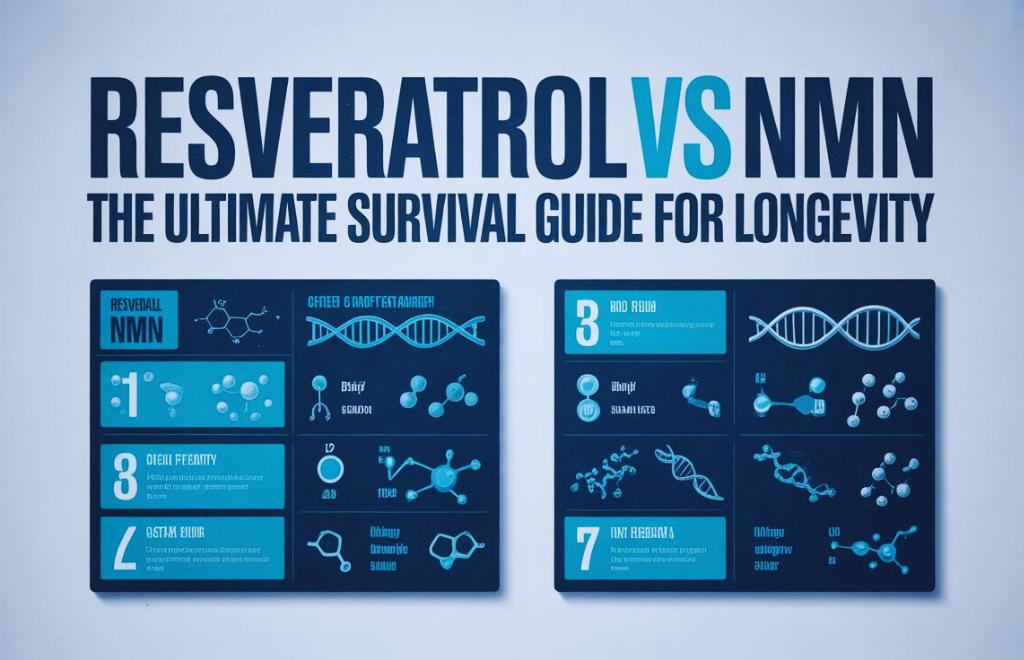
What is Resveratrol? The “Accelerator”
Resveratrol is a natural polyphenol found in the skin of red grapes, berries, and Japanese knotweed. It first gained fame via the “French Paradox”—the observation that the French have lower rates of heart disease despite a diet high in saturated fats, partially attributed to red wine consumption.
Mechanism of Action
Resveratrol acts as a Sirtuin Activator (STAC). Specifically, it targets SIRT1, the primary longevity gene. Imagine your sirtuins are like a high-performance car; Resveratrol is the foot on the gas pedal. It “tricks” the body into thinking it is under stress (similar to calorie restriction or exercise), which triggers cellular defense mechanisms.
Key Benefits of Resveratrol:
- Cardiovascular Protection: Improves blood vessel elasticity and reduces “bad” LDL cholesterol.
- Powerful Antioxidant: Neutralizes free radicals that cause oxidative stress.
- Blood Sugar Regulation: Enhances insulin sensitivity, potentially preventing type 2 diabetes.
- Neuroprotection: Shown in recent 2025-2026 studies to help clear amyloid plaques associated with cognitive decline.
What is NMN? The “Fuel
Unlike Resveratrol, which is a plant-based polyphenol, NMN is a derivative of Vitamin B3 and is naturally produced in our bodies, though in ever-decreasing amounts as we age.
Mechanism of Action
NMN’s primary job is to raise intracellular levels of NAD+. If Resveratrol is the foot on the gas pedal, NMN is the fuel in the tank. Sirtuins cannot function without NAD+; they are NAD-dependent enzymes. No matter how hard you press the “Resveratrol pedal,” the car won’t move if the “NAD+ tank” is empty.
Key Benefits of NMN:
- Mitochondrial Efficiency: Boosts ATP (energy) production, reducing fatigue and “brain fog.”
- DNA Repair: Fuels the PARP enzymes that fix broken DNA strands.
- Muscle Strength: Clinical trials have shown improved aerobic capacity and muscle endurance in middle-aged adults.
- Metabolic Revitalization: Helps reverse age-associated weight gain by optimizing fat oxidation.
Resveratrol vs NMN: A Side-by-Side Comparison
To help you decide which fits your current health goals, let’s look at the data in a structured comparison.
| Feature | Resveratrol | NMN |
| Primary Role | Sirtuin Activator (SIRT1) | NAD+ Precursor (Fuel) |
| Main Source | Grapes, Berries, Knotweed | Broccoli, Avocado (Small amounts) |
| Best For | Heart health, inflammation, SIRT1 | Energy, DNA repair, metabolism |
| Bioavailability | Low (requires fats for absorption) | High (fast absorption via SLC12A8) |
| Typical Dose | 500mg – 1,000mg | 250mg – 1,000mg |
| Standard Timing | Morning (with fat/yogurt) | Morning (empty stomach or light meal) |
The Synergy: Why 1 + 1 = 3
The debate of Resveratrol vs NMN is often a false dichotomy. In the world of longevity science, they are considered a “one-two punch.”
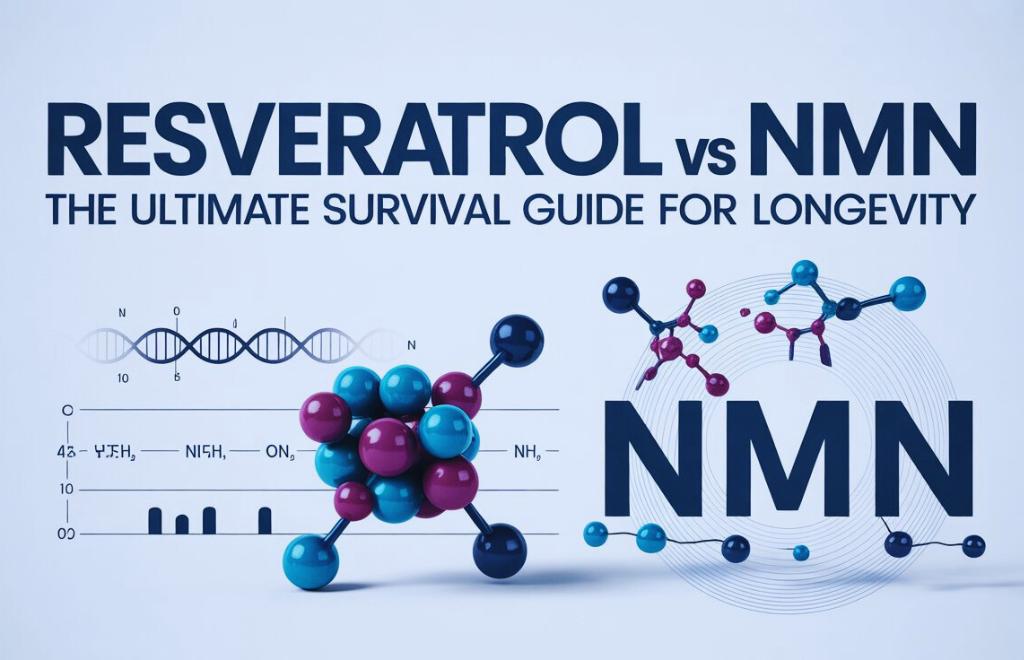
In a landmark study, researchers found that combining the two compounds increased NAD+ levels in muscle and heart tissue significantly more than NMN alone. The logic is simple:
- NMN provides the necessary NAD+ fuel.
- Resveratrol activates the sirtuins to use that fuel efficiently.
Without Resveratrol, your increased NAD+ might be used for basic cellular maintenance but might not fully engage the “longevity pathways.” Without NMN, Resveratrol may try to activate sirtuins that don’t have enough energy to perform their repair duties.
New Research: 2026 Longevity Updates
As of early 2026, several clinical breakthroughs have refined our understanding of Resveratrol vs NMN:
- The “Micronized” Revolution: Resveratrol has historically suffered from poor absorption. New “micronized” and “liposomal” delivery systems have increased its bioavailability by up to 10x, making lower doses more effective.
- NMN Stability: Concerns about NMN degrading into Nicotinamide (which can actually inhibit sirtuins) have been solved by “cold-chain” manufacturing and stabilized crystalline forms.
- Circadian Rhythm Alignment: New data suggests that taking NMN in the morning aligns with the body’s natural NAD+ peaks, whereas taking it at night might interfere with sleep patterns for some users.
Dosage and Safety Guide
When considering Resveratrol vs NMN, safety is paramount. Both compounds are generally regarded as safe (GRAS), but “more” is not always “better.”
Optimal Dosing (General Recommendations):
- Resveratrol: 500mg to 1,000mg daily. It is essential to take this with a source of fat (like Greek yogurt or olive oil) because it is fat-soluble.
- NMN: 250mg (for those under 35) to 1,000mg (for those 40+). High-purity Uthever® or similar certified NMN is recommended to ensure stability.
Potential Side Effects:
- Resveratrol: Mild digestive upset or diarrhea if taken in very high doses (>2,000mg). It may also act as a mild blood thinner, so consult a doctor if you are on anticoagulants.
- NMN: Rare reports of mild nausea or headaches. Because it boosts energy, it may cause insomnia if taken late in the evening.
Expert Consultation: Is it Right for You?
While the science of Resveratrol vs NMN is compelling, supplementation is a personalized journey
Consultatin Note: Before starting any longevity protocol, you should assess your biological age via biomarkers like hs-CRP (inflammation), HbA1c (blood sugar), and NAD+ blood tests. Power-Packed Exercise Tricks You Need Now If you have a history of hormone-sensitive cancers, exercise caution with Resveratrol, as it can have mild estrogenic effects in certain contexts.
Always consult with a healthcare professional specializing in regenerative medicineIf you are on a budget and must choose between Resveratrol vs NMN
Conclusion: Choosing Your Path
If you are on a budget and must choose between Resveratrol vs NMN:
- Choose NMN if your primary goal is energy, cognitive clarity, and immediate metabolic support.
- Choose Resveratrol if you are focused on cardiovascular health and systemic anti-inflammatory benefits.
However, if you are serious about the “Ultimate Survival Guide for Longevity,” the evidence points toward combination therapy. By fueling your cells with NMN and activating your guardians with Resveratrol, you are providing your body with the best possible toolkit to navigate the complexities of aging in the 21st century.
FAQs (Frequently Asked Questions)
Can I get enough Resveratrol from drinking red wine?
No. To get a clinical dose of 1 gram of Resveratrol, you would need to drink roughly 500 to 1,000 bottles of red wine per day. Supplements are the only viable way to reach therapeutic levels
Does NMN cause cancer?
Current research in 2026 shows no evidence that NMN causes cancer. However, because NAD+ fuels all cells, some scientists suggest caution if you have an active, diagnosed malignancy. Always speak with an oncologist in such cases.
Is there an age “sweet spot” to start taking these?
Most experts suggest that NAD+ levels start to decline significantly in the mid-30s. Starting a longevity regimen between ages 35 and 45 is generally considered the “sweet spot” for preventative aging
Should I take NMN on an empty stomach?
Yes, most users report better energy and absorption when NMN is taken sublingually (under the tongue) or on an empty stomach in the morning. Resveratrol, conversely, must be taken with food.
Can I take NR instead of NMN?
:NR (Nicotinamide Riboside) is another NAD+ precursor. While both work, NMN is often preferred in 2026 because it is one step closer to NAD+ in the chemical pathway and has shown superior results in muscle tissue uptake.







Leave a Comment